

LogIQ Labs Pvt.Ltd.
https://eshipz.comAbout
]eShipz: Simplifying Global Shipping for Businesses: At eShipz, we are revolutionizing how businesses manage their shipping processes. Our platform is designed to offer seamless multi-carrier integration, enabling businesses of all sizes to ship effortlessly across the globe. Whether you're an e-commerce brand, a manufacturer, or a logistics provider, eShipz helps streamline your supply chain with real-time tracking, automated shipping labels, cost-effective shipping rates, and comprehensive reporting.
Our goal is to empower businesses by simplifying logistics, reducing shipping costs, and improving operational efficiency. With an easy-to-use dashboard and a dedicated support team, eShipz ensures that you focus on scaling your business while we handle your shipping needs.


Company social profiles


Jobs at LogIQ Labs Pvt.Ltd.


The recruiter has not been active on this job recently. You may apply but please expect a delayed response.
Core Responsibilities
- Data Modeling & Architecture: Designing scalable data models using Star Schema principles. This includes managing relationships, hierarchies, and ensuring the model can handle growing data volumes without slowing down.
- DAX Development: Writing advanced Data Analysis Expressions (DAX) to create complex measures for KPIs, time-intelligence (e.g., Year-over-Year growth), and custom business logic.
- ETL & Data Transformation: Using Power Query (M language) to extract data from various sources (SQL, APIs, Excel, Cloud), clean it, and optimize it through techniques like Query Folding.
- Dashboard & Report Design: Creating intuitive, interactive, and visually compelling reports. This involves selecting the right visuals to tell a "data story" rather than just showing numbers.
- Performance Optimization: Tuning slow reports by analyzing query plans, reducing dataset sizes, and implementing Incremental Refresh for large datasets.
- Governance & Security: Implementing Row-Level Security (RLS) to ensure users only see data they are authorized to view and managing workspace permissions within the Power BI Service.
🛠 Technical Skill Set
1. Expert Level (Power BI Stack)
- Power BI Desktop: Full mastery of the authoring tool.
- DAX & M: Proficiency in both the functional and transformation languages.
- Power BI Service: Understanding of workspaces, gateways, apps, and scheduled refreshes.
2. Supporting Technical Skills
- SQL (Critical): Most "Power BI" jobs are actually 50% SQL jobs. You must be able to write complex queries to pull and pre-filter data at the source.
- Data Warehousing: Familiarity with Snowflake, Azure Synapse, or Databricks.
- Python/R: (Optional but preferred) For advanced statistical modeling or custom visuals.
3. Soft Skills
- Requirement Gathering: The ability to interview stakeholders to understand what business problem they are trying to solve.
- UI/UX Design: A "design eye" to create clean, non-cluttered dashboards.
The recruiter has not been active on this job recently. You may apply but please expect a delayed response.
 Python
Job Summary
The Technical Lead will be responsible for overseeing and leading projects related to Azure Data Factory (ADF), Azure Databricks, SQL, Oracle PL/SQL, and Python. The role involves designing, developing, and implementing data solutions while ensuring they meet the business requirements and align with best practices. (1.) Key Responsibilities
1. Lead and manage end-to-end data engineering projects using azure data factory, azure databricks, sql, oracle pl/sql, and python.
2. Collaborate with stakeholders to gather and understand requirements for data pipelines and analytics solutions.
3. Design and develop etl processes, data models, and data integration solutions.
4. Provide technical guidance and mentorship to the team members.
5. Ensure data quality, data governance, and data security standards are maintained throughout the project lifecycle.
6. Troubleshoot and optimize data pipelines and processes for performance and efficiency.
7. Stay updated on the latest trends and technologies in data engineering and contribute to continuous improvement efforts.
Skill Requirements
1. Proficiency in azure data factory (adf) and azure databricks for building and managing data pipelines.
2. Strong experience with sql and oracle pl/sql for data querying and manipulation.
3. Advanced programming skills in python for scripting and data processing tasks.
4. Knowledge of data modeling, data warehousing concepts, and database design principles.
5. Ability to work in a collaborative team environment and communicate effectively with stakeholders.
6. Strong analytical and problem-solving skills with attention to detail.
7. Experience in data visualization tools and techniques is a plus.
Certifications: Relevant certifications in Azure Data Factory, Azure Databricks, SQL, Oracle PL/SQL, or Python are advantageous.
Skill (Primary)
Data Fabric-Azure-Azure Data Factory (ADF)
The recruiter has not been active on this job recently. You may apply but please expect a delayed response.
 PHP
PHP Javascript
Job Summary
The Technical Lead in Web Development with a focus on JavaScript, Drupal, and PHP will be responsible for overseeing and leading the technical team in the development of web applications using these technologies. The role involves coordinating with stakeholders to gather requirements, designing solutions, and ensuring successful implementation while adhering to best practices. (1.) Key Responsibilities
1. Lead a team of developers in the design, development, testing, and deployment of web applications using javascript, drupal, and php.
2. Collaborate with stakeholders to understand requirements and provide technical solutions that meet business needs.
3. Ensure code quality and adherence to coding standards throughout the development process.
4. Troubleshoot technical issues, identify root causes, and implement solutions to enhance application performance.
5. Stay updated with the latest industry trends in web development and recommend improvements to existing processes.
6. Conduct code reviews and provide guidance to team members for skill development and knowledge sharing.
Skill Requirements
1. Proficient in web development using javascript, drupal, and php.
2. Strong understanding of frontend technologies such as html, css, and bootstrap.
3. Experience in developing and maintaining drupal based websites and applications.
4. In-depth knowledge of php frameworks such as laravel or symfony.
5. Familiarity with database management systems, especially mysql.
6. Ability to lead a technical team, prioritize tasks, and meet project deadlines.
7. Excellent communication skills to interact with stakeholders and team members effectively.
8. Problem-solving attitude and a proactive approach to handle challenges in web development projects.
The recruiter has not been active on this job recently. You may apply but please expect a delayed response.
 React.js
Job Summary
Contribute to the development and optimization of web applications by combining DevOps Solutions, React.js, and full stack Java skills. The role involves designing, implementing, and maintaining software solutions that meet the business requirements efficiently. (1.) Key Responsibilities
1. Collaborate with cross functional teams to define, design, and ship new features.
2. Build and optimize web applications using react.js and full stack java technologies.
3. Implement devops practices to automate processes and improve overall software development efficiency.
4. Troubleshoot and debug applications to ensure optimal performance and reliability.
5. Conduct code reviews and provide constructive feedback to team members.
6. Stay updated on industry trends and new technologies to continuously improve development processes.
Skill Requirements
1. Proficient in devops solutions to streamline software development and deployment processes.
2. Strong experience in react.js for building interactive user interfaces.
3. Expertise in full stack java development, including backend and frontend technologies.
4. Solid understanding of database management and integration.
5. Ability to work in an agile environment and deliver high-quality code within agreed timelines.
6. Excellent problem-solving skills and attention to detail.
7. Good communication skills to collaborate effectively with team members and stakeholders.
Certifications: Relevant certifications in DevOps, React.js, or Java technologies are a plus.
Skill (Primary):
Modern Application Development-Full Stack Development-Java Full Stack
Removal Date
29-May-2027
Job Title: Associate Solution Design / Pre-Sales Consultant – Logistics SaaS
Location:
Bengaluru (On-site)
Experience Required:
2–3 years in Pre-Sales / Business Analysis / Solution Consulting / Supply Chain Technology
About the Role
We are looking for an enthusiastic and detail-oriented Associate Solution Design / Pre-Sales
Consultant to support our sales team in crafting effective logistics solutions for prospective
clients.
This is an excellent opportunity for someone early in their career to gain hands-on
experience in solutioning, client interactions, and SaaS-based logistics platforms, while
working closely with senior solution consultants and enterprise sales teams.
Key Responsibilities
Work with Sales and senior consultants to gather and understand client
requirements
Assist in designing solution workflows across shipping, order processing, and
warehouse operations
Support in creating solution documents, BRDs, and process flow diagrams
Participate in client calls, discovery sessions, and product demonstrations
Help prepare RFP/RFI responses and proposal documents
Collaborate with Product and Tech teams to understand platform capabilities and
constraints
Assist in integration scoping (APIs, SFTP, ERP/WMS connections)
Ensure smooth handover to implementation teams with proper documentation
Contribute to building demo environments, use cases, and reusable assets
Required Skills & Qualifications
2–3 years of experience in Pre-Sales / Business Analyst / Implementation / Solution
Support roles
Basic understanding of logistics and supply chain processes (shipping, warehousing,
order management)
Familiarity with SaaS platforms and system integrations
Good analytical and problem-solving skills
Strong communication skills and ability to interact with clients
Experience in creating process flows, documentation, or requirement gathering
Preferred Qualifications
Exposure to Logistics SaaS / eCommerce / supply chain domain
Basic understanding of APIs, SFTP, or data exchange concepts
Experience working with ERP systems (SAP, Oracle, etc.)
Key Competencies
Willingness to learn and adapt quickly
Strong attention to detail
Love for Solving Problems
Ability to work collaboratively with cross-functional teams
Structured thinking and documentation skills
What You’ll Gain
Hands-on exposure to end-to-end pre-sales and solution design
Opportunity to work with enterprise clients and modern SaaS platforms
Mentorship from experienced solution consultants and sales leaders
Fast-track growth into Solution Consultant / Pre-Sales Lead roles
The recruiter has not been active on this job recently. You may apply but please expect a delayed response.
As a Key Account Manager (KAM) in 2026, the role has shifted from being a "relationship manager" to a "strategic growth architect." You are now expected to use AI-driven insights to predict client needs and act as a consultant rather than just a vendor.
Below is a modern, professional Job Description for a KAM.
Job Title: Key Account Manager (KAM)
Role Overview:
We are looking for a Key Account Manager to oversee and nurture our most valuable client relationships. In this role, you aren't just a point of contact; you are a strategic partner. Your goal is to deeply understand the client’s business objectives and align our solutions to help them achieve long-term success. You will manage a high-value portfolio, ensuring retention, identifying expansion opportunities, and driving mutual profitability.
Key Responsibilities:
- Strategic Partnership: Build and maintain long-term, trusting relationships with "big player" clients, acting as their primary advocate within our company.
- Account Growth (Upselling/Cross-selling): Identify "white space" opportunities within existing accounts to introduce new products or services that solve specific client pain points.
- Predictive Problem Solving: Use data analytics and AI tools to monitor account health and proactively resolve issues before they escalate.
- Contract Negotiation: Lead complex negotiations for contract renewals and pricing agreements, ensuring terms are beneficial for both parties.
- Cross-Functional Leadership: Collaborate with Marketing, Product, and Support teams to ensure seamless delivery and tailored solutions for your key accounts.
- Market Intelligence: Stay ahead of industry trends and competitor moves to provide your clients with consultative insights that position them for success.
Required Skills & Qualifications :
- Relationship Management: Proven ability to manage large-scale accounts and build rapport with C-suite stakeholders.
- Commercial Acumen: Strong understanding of P&L, budgeting, and financial forecasting.
- Analytical Thinking: Proficiency in using CRM software (Salesforce, HubSpot) and AI-driven dashboards to interpret customer data.
- Negotiation & Persuasion: Expert-level communication skills with a track record of closing high-stakes deals.
- Adaptability: Ability to pivot strategies in a fast-paced, digital-first market
The recruiter has not been active on this job recently. You may apply but please expect a delayed response.
Key responsibilities
- Design, develop, and maintain automated test scripts using Katalon Studio for web, API, mobile, and desktop applications.
- Create and execute detailed test plans, test cases, and test scripts based on business requirements and technical specifications.
- Perform functional, regression, smoke, integration, and end-to-end testing across multiple environments.
- Build and manage reusable test frameworks and keyword-driven test libraries within Katalon.
- Integrate automated tests into CI/CD pipelines using tools like Jenkins, GitLab CI, or Azure DevOps.
- Conduct API testing using Katalon's built-in API testing capabilities and tools like Postman or REST Assured.
- Log, track, and verify defects using bug tracking tools such as Jira; ensure timely closure of issues.
- Participate in sprint planning, daily standups, and retrospectives as part of an Agile team.
- Analyse test results, generate reports, and communicate quality metrics to stakeholders.
- Mentor junior QA team members and contribute to continuous improvement of QA processes.
Good to have
- Katalon certification or any ISTQB / CSTE quality assurance certification.
- Experience with Appium or mobile testing frameworks for Android and iOS.
- Knowledge of performance testing tools such as JMeter or Gatling.
- Familiarity with BDD frameworks like Cucumber and Gherkin syntax.
- Exposure to cloud-based testing platforms such as BrowserStack or Sauce Labs.
- Understanding of SQL for database validation and backend testing.
The recruiter has not been active on this job recently. You may apply but please expect a delayed response.
Python MongoDB
Job Summary
We are seeking a highly motivated Technical Product Manager with strong exposure to software development to drive product strategy, roadmap execution, and cross-functional collaboration. The ideal candidate will bridge the gap between business stakeholders and engineering teams, ensuring delivery of scalable, high-quality software products.
Key Responsibilities.
prior exposure to Software Development.
Collaborate closely with engineering, design, QA, and business teams to deliver end-to-end product solutions.
Translate business requirements into technical specifications and user stories.
Work with development teams to ensure timely delivery of features and releases.
Prioritize product backlog based on business value, customer needs, and technical feasibility.
Participate in Agile/Scrum ceremonies such as sprint planning, stand-ups, and retrospectives.
Analyze product performance and user feedback to drive continuous improvement.
Ensure product scalability, performance, and technical feasibility.
Coordinate with stakeholders for product launches and go-to-market strategies.
- Maintain product documentation including PRDs, technical documents, and release notes.
Required Skills
Strong understanding of software development lifecycle (SDLC).
Hands-on experience or exposure to programming languages (Python preferred most )
Experience working with Agile/Scrum methodologies.
Strong knowledge of APIs, microservices, and system design concepts.
Ability to work closely with engineering teams and understand technical challenges.
Excellent analytical, problem-solving, and communication skills.
- Experience with product management tools (JIRA, Confluence, etc.).
The recruiter has not been active on this job recently. You may apply but please expect a delayed response.
 Amazon Web Services (AWS)
Key Responsibilities
- Design, implement, and maintain highly available infrastructure on AWS.
- Automate infrastructure provisioning using Terraform (Infrastructure as Code).
- Define and monitor SLIs, SLOs, and error budgets to improve service reliability.
- Build and manage CI/CD pipelines to enable safe and frequent deployments.
- Implement robust monitoring, alerting, and logging solutions.
- Perform incident response, root cause analysis (RCA), and postmortems.
- Improve system resilience through automation and self-healing mechanisms.
- Optimize cloud resource utilization and cost (FinOps awareness).
- Collaborate with development teams to improve application reliability.
- Manage containerized workloads using Docker and Kubernetes (EKS preferred).
- Implement security and compliance best practices across infrastructure.
- Maintain operational runbooks and documentation.
Required Qualifications
- Bachelor’s degree in Computer Science, Engineering, or related field.
- 7–8 years of experience in SRE, DevOps, or Production Engineering.
- Strong hands-on experience with AWS services.
- Proven experience with Terraform for infrastructure automation.
- Experience building CI/CD pipelines (GitHub Actions, Jenkins, or similar).
- Strong scripting skills (Python, Bash, or Shell).
- Experience with Linux system administration.
- Hands-on experience with monitoring and observability tools.
- Good understanding of networking and cloud security fundamentals.
- Experience with Git and branching strategies
The recruiter has not been active on this job recently. You may apply but please expect a delayed response.
Amazon Web Services (AWS) Jenkins
Key Responsibilities
- Design, implement, and maintain highly available infrastructure on AWS.
- Automate infrastructure provisioning using Terraform (Infrastructure as Code).
- Define and monitor SLIs, SLOs, and error budgets to improve service reliability.
- Build and manage CI/CD pipelines to enable safe and frequent deployments.
- Implement robust monitoring, alerting, and logging solutions.
- Perform incident response, root cause analysis (RCA), and postmortems.
- Improve system resilience through automation and self-healing mechanisms.
- Optimize cloud resource utilization and cost (FinOps awareness).
- Collaborate with development teams to improve application reliability.
- Manage containerized workloads using Docker and Kubernetes (EKS preferred).
- Implement security and compliance best practices across infrastructure.
- Maintain operational runbooks and documentation.
Required Qualifications
- Bachelor’s degree in Computer Science, Engineering, or related field.
- 7–8 years of experience in SRE, DevOps, or Production Engineering.
- Strong hands-on experience with AWS services.
- Proven experience with Terraform for infrastructure automation.
- Experience building CI/CD pipelines (GitHub Actions, Jenkins, or similar).
- Strong scripting skills (Python, Bash, or Shell).
- Experience with Linux system administration.
- Hands-on experience with monitoring and observability tools.
- Good understanding of networking and cloud security fundamentals.
- Experience with Git and branching strategies







Similar companies

About the company
Jobs
3

About the company
Jobs
0


About the company
Jobs
2

About the company
Jobs
0

About the company
Bigship is India's first business hub which offers you solutions for all your eCommerce business needs, i.e. Digital marketing, Call Centre and automated Shipping. Focus on growing your business while we help you keep your costs and tasks in line. Keep connected and make us a part of your success story. Register today 🚀🚚 bit.ly/33VGvzT
Jobs
0
About the company
Jobs
0
About the company
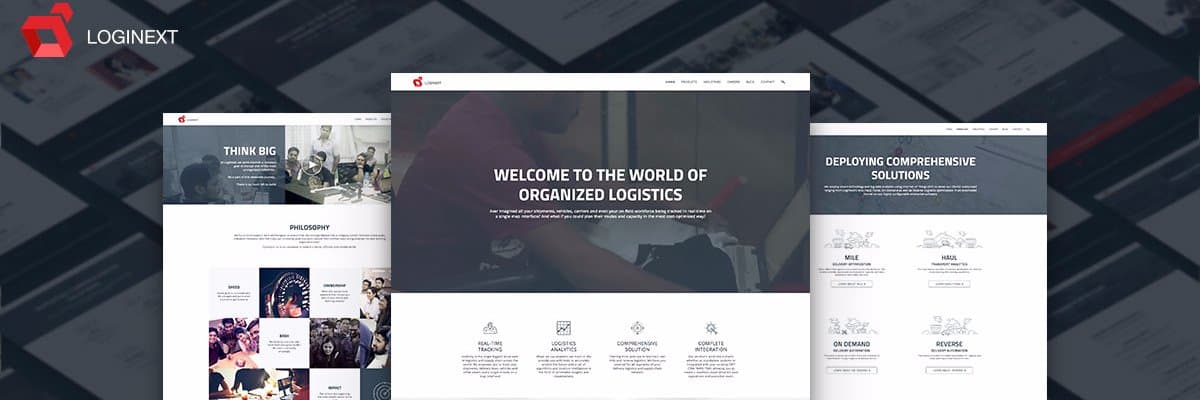
LogiNext is amongst the fastest growing tech company, providing solutions to simplify and automate the ecosphere of logistics and supply chain management. Our aim is to organize the daunting process of logistics and supply chain planning, with an array of SaaS driven by the most robust enterprise solutions globally.
Our clientele is spread across the globe and we empower them to optimize their supply chain operations by unique data capturing, advanced analytics and visualization. From inception, LogiNext has been an industry leader and recipient of awards like NetApp's Innovative Tech Company of the year, Entrepreneur's Logistics Firm of the Year, Aegis's innovation in Big Data, CIO Choice Award for best supply chain logistics cloud solutions, etc.
Backed by influential industry leaders like PayTM and Indian Angel Network and with partners like IBM, Microsoft, Google, AWS and Samsung, LogiNext has achieved exponential success in a very short span of time and is set to exceed 300% growth by the end of 2016. The true growth hackers, who paved way for this success are the people working exceptionally hard and adding value to our organisation. Our brand ambassadors - that's how we address our people, bring unique values, discipline and problem-solving skills to nurture the innovative and entrepreneurial work culture at LogiNext. Passion, versatility, expertise and a hunger for success is the Mantra chanted by every Logi-Nexter!
Jobs
56
About the company
Jobs
0
About the company
WareIQ’s mission is simple: provide Amazon-grade logistics to online brands in India.
We’re backed by reputed investors like Y Combinator, Funders Club, Soma Capital, Pioneer Fund & Emles Advisors, who have a background in backing transformative tech businesses.
We are setting up our core tech team and hiring exciting tech talent to build a modern fulfillment platform built for speed.
We expect you to solve real-life complex problems and create compelling experiences for our users. We have a culture of fast-paced development and delivery. The pace of our growth is incredible. If you want to tackle interesting problems, and create an impact within an entrepreneurial environment, join us!
Jobs
1

About the company
Jobs
3