
Japanese Linguistic - Language Translator for LLM at TIFIN FINTECH INDIA · Remote only · 3 - 6 years · ₹8L - ₹20L / yr · Raised funding · Remote only · Posted 9 Sep 2025

About TIFIN
TIFIN is a fintech platform backed by industry leaders including JP Morgan, Morningstar, Broadridge, Hamilton Lane, Franklin Templeton, Motive Partners, and many others. We are creating engaging wealth experiences to improve financial lives through AI and investment intelligence–powered personalization.
Our mission is to transform wealth management the way personalization has transformed movies and music—while holding the added responsibility of delivering better financial outcomes.
We leverage design and behavioral science to create engaging experiences through software and APIs. By applying investment science and intelligence, we build algorithmic engines that enable better investor outcomes—matching individuals to financial advice and investments based on their unique goals.
Our Values: Go with your GUT
- Grow at the Edge – We embrace personal growth, step outside comfort zones, and work with self-awareness and integrity. No excuses.
- Understanding through Listening and Speaking the Truth – We value transparency, radical candor, authenticity, and precision. We challenge, but once decisions are made, we commit fully.
- I Win for Teamwin – We stay within our genius zones, take ownership, and move together in formation to succeed as a team.
Key Responsibilities
Translation Evaluation & Linguistics (70%)
- Evaluate and annotate LLM-generated translations for Japanese, covering nuanced, real-world usage across finance, communication, and culture.
- Compare AI outputs with high-quality human translations, identifying errors in phrasing, idioms, tone, and contextual accuracy.
- Apply annotation and scoring frameworks (e.g., BLEU, ROUGE, COMET) to ensure quality benchmarks.
- Provide detailed linguistic feedback to improve AI model training.
AI/LLM Collaboration (30%)
- Work with engineers, data scientists, and project managers to share reports and linguistic insights.
- Contribute to building datasets and test cases through language corpora and research work.
- Maintain structured evaluations, documentation, and logs to support ongoing improvements.
Required Qualifications
- Education: Bachelor’s or Master’s in Linguistics, Translation, Language Technology, Communication, or related fields.
- Language Proficiency: Native or near-native fluency in (3+ Years)Japanese and strong command of English.
- Experience: Proven track record in translation, localization, or linguistic evaluation.
- Analytical Rigor: Hands-on experience in language quality evaluation, annotation, or error analysis.
- Technical Curiosity: Familiarity with LLMs, AI tools, or prompt engineering is an advantage.
- Soft Skills: Highly organized, detail-oriented, and able to communicate effectively across technical and non-technical teams.
Desired Skills
- Experience with annotation platforms or evaluation technology.
- Background in corpus development, curriculum design, or language research projects.
- Experience in process optimization, reporting, or content operations.


Shubham Vishwakarma
Full Stack Developer - Averlon


About TIFIN FINTECH INDIA
About
Tech stack
 Python
 Django
 MongoDB
 PostgreSQL
 React.js
 Javascript
Candid answers by the company
Mumbai & Bangalore
Photos
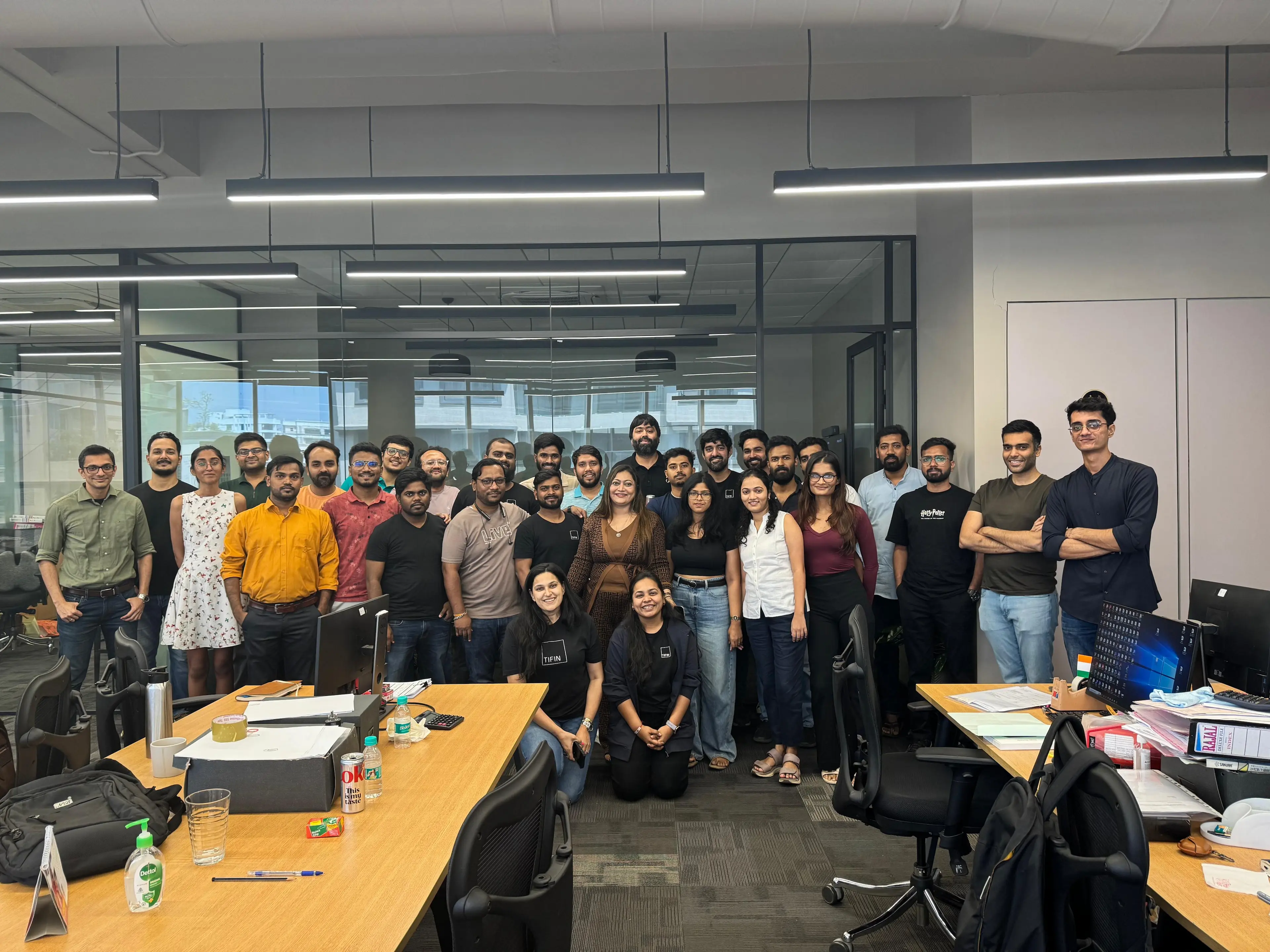
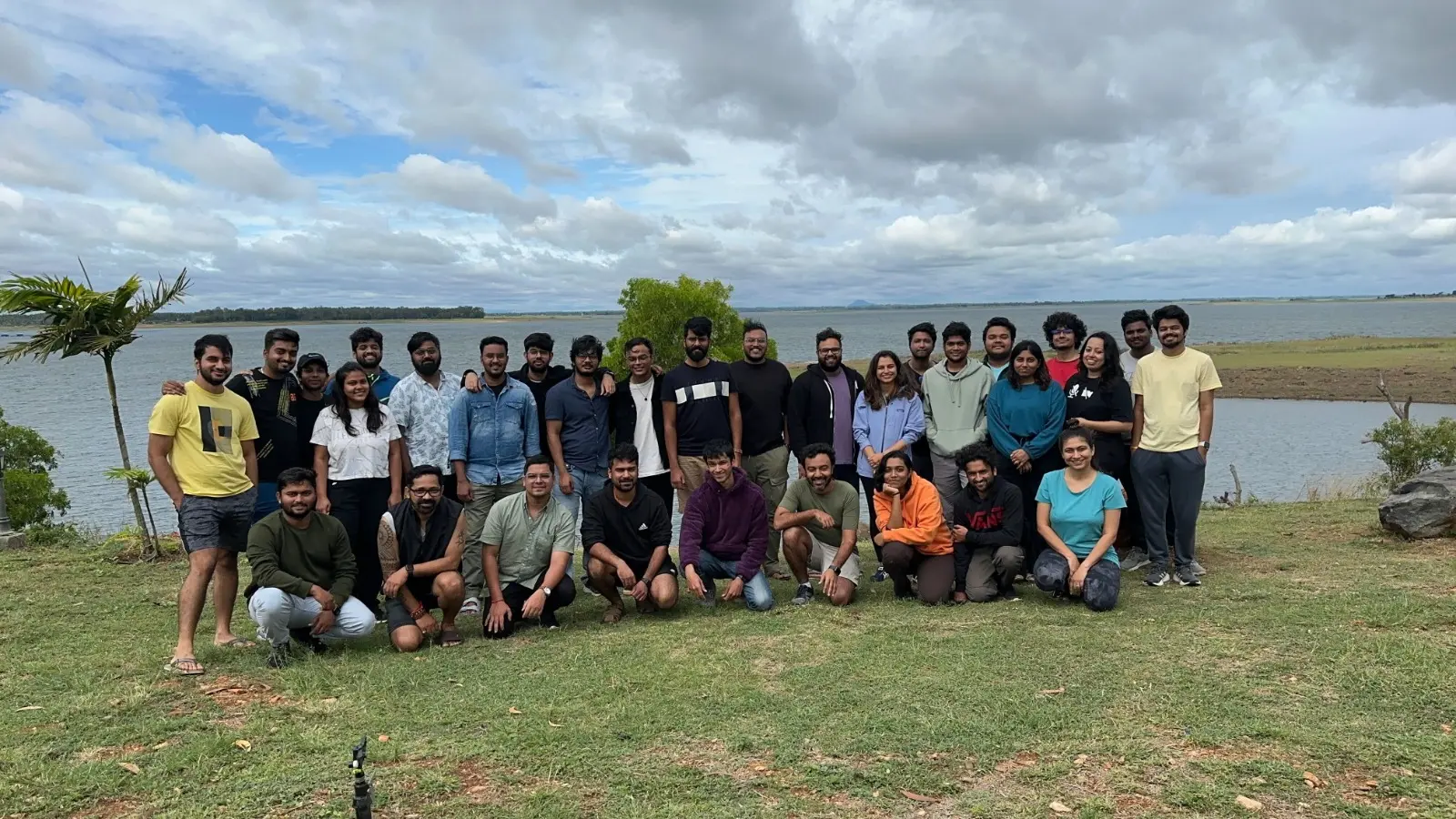


Connect with the team


Company social profiles

Similar jobs (10)


Role Overview
We are looking for an experienced professional to evaluate AI-generated responses for conversational AI agents used in travel-related products. The role focuses on assessing response accuracy, relevance, completeness, and quality to improve AI performance.
Key Responsibilities
- Evaluate AI-generated responses against predefined guidelines and quality standards.
- Perform data annotation, labeling, classification, and quality reviews.
- Identify incorrect, misleading, irrelevant, or incomplete responses and potential AI hallucinations.
- Analyze evaluation data to identify recurring errors, quality gaps, and improvement opportunities.
- Track quality metrics, document findings, and recommend improvements.
- Use Excel/Google Sheets and basic SQL, where applicable, to analyze evaluation data.
- Collaborate with AI and Machine Learning teams to improve conversational AI performance.
Required Skills
- 5–8 years of experience in Data Annotation, AI Evaluation, Content Quality, Search Relevance, or Quality Assurance.
- Strong analytical, problem-solving, and attention-to-detail skills.
- Experience applying evaluation guidelines and quality standards consistently.
- Proficiency in Excel or Google Sheets.
- Good written communication and documentation skills.
- Understanding of quality metrics and data analysis.
Good to Have
- Exposure to Generative AI, LLMs, conversational AI, or AI response evaluation.
- Experience with Human-in-the-Loop (HITL), AI training data validation, or hallucination detection.
- Basic SQL knowledge.
- Experience in travel, hospitality, or search quality evaluation.

 Python
LLM/AI Model Engineer – Training, Evaluation & Benchmarking
Location: New Delhi, India (On-site)
Employment Type: Full-time
Experience: 3–5 years
Industry: Enterprise AI / Generative AI / Machine Learning / NLP
About QubeLabs
QubeLabs is building the next generation of Enterprise AI Systems that transform workforce operations and intelligence for the financial services industry.
Our platform combines Conversational AI, Agentic AI, workflow automation, proprietary language models and enterprise intelligence. Our flagship product, QubeLabs Workmate, serves banks, NBFCs, MFIs, wealth management firms, insurance companies and fintechs across India and Europe.
At the core of our AI platform is the Vectro Series, our proprietary family of language models designed for enterprise and financial-services use cases.
We are looking for an LLM/AI Model Engineer to build the training pipelines, datasets and evaluation infrastructure required to continuously improve the Vectro Series.
Role Overview
You will work closely with the Head of AI, Research Partners and engineering teams to implement and operationalize LLM training approaches and build a reliable model improvement lifecycle:
Data Preparation → Training → Evaluation → Benchmarking → Error Analysis → Model Improvement
The role combines hands-on LLM fine-tuning, dataset engineering, tokenization, evaluation framework development and model quality management.
Key Responsibilities
1. LLM Training & Fine-tuning
Build and maintain pipelines for training and fine-tuning open-source foundation models for the Vectro Series.
Implement supervised fine-tuning (SFT), parameter-efficient fine-tuning (PEFT), LoRA/QLoRA and domain adaptation techniques; support continued pre-training where required.
Manage training configurations, checkpoints, model versions and experiment tracking.
Optimize training workflows for computational efficiency, reproducibility and reliability.
Translate model development approaches defined with the Head of AI and Research Partners into practical, scalable training pipelines.
2. Training Data & Tokenization
Build data pipelines to collect, clean, filter, normalize, deduplicate and validate training data.
Develop instruction-tuning, SFT and domain-specific datasets for financial-services and enterprise use cases.
Implement tokenization workflows, tokenizer configuration, vocabulary management, sequence packing, truncation and padding.
Address data representation challenges involving financial terminology, numerical values and multilingual content.
Maintain dataset versioning, lineage and quality controls, incorporating identified data gaps and relevant model failures into future training data.
3. Golden Dataset & Model Evaluation
Build and maintain QubeLabs' Golden Dataset to evaluate key model capabilities and target use cases.
Develop automated evaluation pipelines and reusable evaluation harnesses, combining automated metrics with human assessment where appropriate.
Evaluate accuracy, reasoning, factuality, instruction following, safety, multilingual performance and financial-domain capabilities.
Establish consistent evaluation methodology and regression tests to measure changes across model versions.
4. Benchmarking & Error Analysis
Evaluate Vectro against relevant public benchmarks and proprietary QubeLabs BFSI/enterprise benchmarks.
Compare results with relevant open-source and commercial models using consistent evaluation conditions.
Analyze failures, identify root causes across data, training and model behavior, and translate findings into actionable improvements.
Maintain reproducible benchmark results and reports to track model strengths, limitations and progress.
5. Model Quality & Release
Define model release quality gates and ensure each major release meets agreed evaluation and benchmark criteria.
Support red-teaming, robustness and safety testing.
Coordinate with the Head of AI, Research Partners and engineering teams to ensure validated model improvements are suitable for integration into production systems.
Experience
3–5 years in Machine Learning, Deep Learning, NLP, Generative AI or related fields.
Hands-on experience training or fine-tuning LLMs using open-source foundation models.
Practical experience building training pipelines, preparing datasets and evaluating model performance.
Experience with GPU-based training; distributed training is an advantage.
Financial-services, multilingual AI or enterprise AI experience is preferred.
Required Skills
LLM & Machine Learning: Large Language Models, Transformer architectures, Generative AI, NLP, Deep Learning, SFT, PEFT, LoRA/QLoRA, fine-tuning and continued pre-training.
Frameworks & Infrastructure: Python, PyTorch, Hugging Face Transformers, Hugging Face Tokenizers, GPU computing, experiment tracking and ML pipelines.
Data & Tokenization: Tokenization, tokenizer configuration, text preprocessing, sequence packing, dataset construction, data quality, versioning and lineage.
Evaluation & Benchmarking: Golden datasets, LLM evaluation, evaluation harnesses, automated and human evaluation, LLM-as-a-Judge, public and domain-specific benchmarks, regression testing and error analysis.
The role requires the ability to build both the model training pipeline and the measurement system that determines whether the model has actually improved.
What Success Looks Like
Reliable and reproducible training and fine-tuning pipelines for the Vectro Series.
High-quality training datasets, tokenization workflows and a comprehensive Golden Dataset.
Automated evaluation and benchmarking infrastructure with measurable model quality gates.
Clear, reproducible evidence of model performance against public, proprietary BFSI and relevant competing-model benchmarks.
A continuous improvement loop that converts evaluation findings into measurable gains across successive Vectro releases.
Key Performance Indicators
Training pipeline reliability and experiment throughput.
Training data quality and coverage.
Golden Dataset and evaluation coverage.
Benchmark reproducibility and model performance improvement.
Accuracy of error diagnosis and effectiveness of regression detection.
Time required to complete training, evaluation and benchmarking cycles.
Compliance with model release quality criteria.
Why Join QubeLabs?
Build the proprietary Vectro Series of enterprise and financial-services language models.
Develop model training, evaluation and benchmarking infrastructure from the ground up.
Work closely with the Head of AI and Research Partners.
Solve real-world AI challenges across financial services.
Develop proprietary datasets, benchmarks and model improvement systems.
Contribute directly to production AI systems serving customers across India and Europe.
Preferred Candidate Profile
B.Tech, M.Tech, MS or PhD in Computer Science, AI, ML, Mathematics or a related field.
3–5 years of relevant experience with strong practical skills in Python, PyTorch, LLM fine-tuning and training data pipelines.
Working knowledge of tokenization, evaluation datasets, benchmarking and regression testing.
Experience with open-source models such as Llama, Qwen, Mistral or similar is preferred.
Ability to independently build reliable model training and evaluation systems from scratch.
QubeLabs is an equal opportunity employer and values diversity and inclusion. We encourage applications from qualified candidates regardless of background or identity.


The recruiter has not been active on this job recently. You may apply but please expect a delayed response.
Python Machine Learning (ML)
The Role
You own AI systems end to end. From the speech-to-text models that turn audio into text, to the diarization that separates and identifies speakers, to the agentic layer that turns conversation into memory and action, to the observability and evaluation that keep all of it honest in production. This is a wide role by design. You will own model selection, serving, and production reliability. If you want to tune one model and ignore the system around it, this is not the role.
What You Will Own
• Speech-to-text. Evaluate, integrate, and optimize STT models across cloud and self-hosted. Drive accuracy and cost trade-offs with ground-truth metrics.
• Speaker diarization and identification. Push accuracy on hard, real-world, multi-speaker audio.
• Agentic AI. Build the memory and retrieval pipeline, LLM orchestration, and the agent workflows that sit on top of captured conversation.
• Model serving and infrastructure. Stand up and optimize self-hosted serving (vLLM, Triton class). Own latency, throughput, and cost per user.
Observability
An always-on wearable means models run in production every second, on messy real-world audio. You own the visibility into that.
• Instrument the full audio-to-memory pipeline: STT, diarization, retrieval, and LLM calls.
• Define and track model-quality SLOs in production: transcription drift, diarization error over time, retrieval relevance, latency, throughput, and cost per user.
• Build dashboards and alerting so model degradation is caught before users feel it.
• Trace failures across a distributed, always-on system using metrics, logs, and traces.
• Close the loop. Production signals feed back into evaluation and model selection.
Evaluation
We do not ship what we cannot measure. You own the systems that prove a model is actually better, not just newer.
• Build and own ground-truth evaluation harnesses for every model in the stack.
• Measure with real metrics: WER for transcription, DER for diarization, Recall and F1 for retrieval and speaker identification.
• Build and maintain labeled benchmark datasets that reflect real, messy, multi-speaker audio.
• Run regression and A/B evaluations on every model swap, prompt change, or pipeline update. Nothing ships on a vibe.
• Reject anecdotal proxies, single confidence scores, and cherry-picked examples as evidence of quality.
What We Are Looking For
• 3 to 5 years as an AI/ML engineer with production systems behind you. Engineering and production experience is non-negotiable.
• Depth across the modern AI stack: LLMs, speech models, vector retrieval, model serving.
• Strong software engineering. You write code that ships and survives contact with real users.
• Fluency in Python and the production ML ecosystem.
• Comfort with cloud infrastructure (GCP a plus) and containerized deployment on Kubernetes.
• A working command of observability and evaluation. You measure first and trust metrics over intuition.
• First-principles reasoning and metric discipline.
Nice to Have
• Research background or publications. A strong signal, not a substitute for production work.
• Audio and speech ML experience (STT, diarization, voice).
• Experience self-hosting and optimizing open models.
• Experience with LLM gateway and agent orchestration patterns.
• Experience building eval harnesses or production model-monitoring systems.
Requirements
Agentic work is must. Audio is good to have
. Self hosting models is a must
Experience with LLM gateway and agent orchestration is a must have
PythonAbout Us
Invorto is our Voice AI product, bringing intelligent voice agents to real-world customer and operational use cases. Our voice pipeline is built in Python, running an STT → LLM → TTS architecture on top of the Pipecat framework.
This is a chance to work on hard problems in voice AI — latency, accuracy, naturalness, and reliability — building zero-to-one, owning your area end-to-end, and shipping to production at scale.
Note: This is a customer-facing role, and strong communication skills are essential.
About the Role
We're looking for a Voice AI Research Engineer to join the Invorto team and help build and continuously improve the voice AI systems that power our intelligent voice agents. This role is focused on the specialized craft of voice AI — designing evaluation and automation frameworks that ensure our STT, LLM, and TTS pipeline performs reliably in real-world, production conditions.
What You'll Do
- Design and build automated testing and quality frameworks for our STT → LLM → TTS voice pipeline, built on Pipecat
- Evaluate and benchmark STT, LLM, and TTS/ASR components on accuracy, latency, naturalness, and robustness across accents, languages, and real-world audio conditions
- Work hands-on with STT, TTS, and ASR models — fine-tuning, evaluating, and improving them for production use cases
- Identify failure modes and edge cases across the pipeline (background noise, accents, interruptions, turn-taking, latency, pipeline-stage handoffs) and build systems to catch them before production
- Collaborate closely with engineering to integrate quality checks and automation into the voice agent development lifecycle within the Pipecat-based architecture
- Research and stay current with advances in voice AI, and bring in new techniques, models, and tools to improve pipeline performance
- Work directly with customers to understand real-world voice use cases and translate them into evaluation criteria and quality benchmarks
- Partner with product and engineering to define what "production-grade quality" means for voice agents and drive the team toward it
What We're Looking For
- 4–6 years of experience, with a specialization in voice AI systems and automated quality evaluation
- Hands-on experience with STT (Speech-to-Text), TTS (Text-to-Speech), and ASR (Automatic Speech Recognition) models
- Experience designing and building automated testing/evaluation frameworks for voice or speech systems
- Strong understanding of what drives voice AI quality — accuracy, latency, naturalness, and robustness to real-world variability
- Strong programming skills in Python; familiarity with Pipecat or similar voice pipeline/orchestration frameworks is a plus
- Understanding of STT → LLM → TTS pipeline architectures and the trade-offs involved at each stage
- Research mindset — comfortable exploring new models, techniques, and tools and translating them into practical improvements
- Excellent communication skills — this is a customer-facing role, and you'll regularly engage directly with customers to understand needs and validate quality expectations


 Data SciencePython
Support with design and build to prove out agentic AI solution flow by working with other data
scientists and engineers to build, train Large Language Model (LLM) architectures, RAG
systems, and autonomous agentic workflows
Key qualifications:
>> AI solution design & Development: Design Agentic AI solutions using RAG (Retrieval-
Augmented Generation) and orchestration frameworks like LangGraph or LangChain.
>> Model Fine-Tuning: Solid understanding and experience with Pre-train, fine-tune, and
optimize open-source like BERT, LLama, and other proprietary foundation models for domain-
specific tasks
>> Solid Stats and ML foundations and (vibe) coding skills with Python, PySpark
>> Implement validation frameworks and tracing practices (using tools like Arize) to monitor
agent behavior, guard against model drift, and ensure compliance
>> Collaborate with Engineering to deploy models securely on cloud and on-prem ecosystems

 Python
Senior AI Engineer
Code Generation, Agent Architecture & LLM Systems
📍 Mumbai (On-site) | Full-time | 5+ years
About the Role:
Unico Connect is an AI-first technology partner that builds custom mobile, web, and AI products for clients across multiple geographies.
We are hiring a Senior AI Engineer for a dedicated client engagement focused on building an AI-powered application builder platform - a product where users describe software in plain English and the system generates, previews, and iteratively refines working code.
The mandatory requirement for this role is hands-on production experience shipping LLM-powered systems with agent architectures, with experience in code generation or developer tooling contexts a strong advantage.
The role is product-focused and deeply hands-on. You will own everything between the user's prompt and correct code landing in the project: the agentic loop, code generation pipeline, context management, evaluation suite, and model cost strategy.
You will work alongside the Senior MLOps Engineer who operationalises the infrastructure around your system, and collaborate closely with backend, frontend, and DevOps engineers.
Responsibilities:
Agent Architecture
Design and own the agentic loop for the platform - request interpretation, planning, tool-calling sequence (read file, edit file, run build, search code, install package), and stop conditions.
Make and revisit architectural decisions on single-agent vs. multi-agent designs, including planner/executor splits and dedicated build-repair sub-agents.
Code Generation Pipeline
Own the end-to-end generation flow: task classification, context gathering, planning, targeted edits, verification, and commit.
Implement diff/search-replace-based file editing with fuzzy matching and fallback strategies.
Enforce scope discipline so the agent makes minimal diffs and does not modify code it was not asked to touch.
Self-Repair Loop
Build and tune the automated repair loop that pipes compiler, lint, build, and runtime errors back to the model with retry budgets and model escalation.
This loop is the primary quality lever - the difference between 60-70% and 90%+ build success rates.
Context Management
Build file-relevance retrieval so the agent sees the right files, not the whole codebase: dependency graphs, AST/tree-sitter-based chunking, embeddings, recency signals, and hybrid retrieval.
Implement conversation summarisation and memory for long sessions, and address long-project degradation through codebase summaries and periodic consistency passes.
Own token budgeting and prompt caching strategy.
Prompt Engineering as a Discipline
Own the system prompt and per-task prompt variants (new feature, bug fix, styling change).
Maintain few-shot examples and enforce coding conventions, stack rules, and prohibited behaviours such as no hardcoded secrets and no whole-file rewrites.
Version prompts like code with changelogs and rollback capability.
Evaluation and Quality Measurement
Design and own the evaluation suite: representative test prompts run on every prompt and model change, scored on build success rate, instruction adherence, and output quality including LLM-as-judge and visual/screenshot checks where relevant.
Define regression gates that block quality-degrading changes from shipping.
Treat evals the way engineers treat automated testing: versioned, automated, and tracked over time.
This responsibility is non-negotiable at this level.
Model Strategy and Cost
Design model routing - cheap and fast models for classification and small edits, frontier models for complex generation.
Drive cost optimisation through prompt caching, diff-based edits over full-file rewrites, and tighter context selection.
Track cost per agent run and tokens per task; evaluate new model releases against the eval suite and lead migrations when results justify it.
Safety and Reliability of Agent Behaviour
Defend against prompt injection from user content and fetched web content.
Ensure secrets never appear in generated client code.
Define what the agent's tools may and may not do in collaboration with the platform team.
Contribute to output moderation and abuse-pattern awareness.
Mentorship and Engineering Standards
Run code reviews, define engineering conventions for AI work, and raise the engineering bar across the AI team.
Work closely with the Senior MLOps Engineer on handoff of eval design, prompt configurations, and model routing logic.
Requirements:
Hands-on Production Ownership of LLM-Powered Systems with Agent Architectures (Mandatory)
Must have personally shipped and operated at least one complex production AI system - agentic, multi-step, or code generation - with end-to-end ownership of architecture, evaluation, and cost.
POCs, internal demos, and tutorial-grade work do not qualify.
5+ Years of Professional Software or AI Engineering Experience
With at least 3 years focused on LLM applications, AI engineering, or production AI systems.
Candidates with strong backend backgrounds and a clear, substantive pivot into LLM systems qualify.
Strong Python Proficiency and Service Development
Production-grade Python with FastAPI or equivalent: type hints, async patterns, streaming responses, testing, and packaging.
Not notebook-only.
Depth Across LLM APIs and Agent Systems
Production experience with at least two of OpenAI, Anthropic Claude, Google Gemini, or open-weight models (vLLM, Ollama, Together).
Production experience with at least one agent framework (LangGraph, CrewAI, AutoGen, LlamaIndex Agents) or hand-rolled equivalent.
Hands-on with tool calling, structured outputs, and multi-step reasoning.
Demonstrated, Systematic Evaluation Practice - Non-Negotiable
Must have built evaluation harnesses that gate production releases, not ad-hoc testing.
Hands-on with at least one of LangSmith, Langfuse, Promptfoo, Ragas, or DeepEval.
Candidates with no systematic answer to evaluation should not be considered at senior level regardless of other strengths.
Cost Discipline for Production AI
Track record of measurable cost optimisation on production AI features.
Able to speak in specifics: cost per request, savings achieved through caching or model routing, context reduction decisions.
AWS Working Knowledge
Hands-on with EC2, S3, IAM, and Docker.
Comfort with CI/CD workflows and deploying AI services.
Awareness of LLM Security Failure Modes
Familiar with prompt injection patterns, understands that system prompt rules alone are insufficient, and has experience with output validation and content safety in production.
Nice to Have
- Experience with AST/tree-sitter tooling, diff-based editing systems, or compiler-adjacent work
- MCP server authoring
- Open-source AI contributions
- Published technical writing on LLM systems
- Multi-modal model experience
- Fine-tuning exposure (LoRA, QLoRA, PEFT)

 Python
Job Description:
We are looking for a hands-on AI Engineer with experience in Generative AI and Agentic AI to build and deploy production-ready AI solutions.
Key Responsibilities:
- Develop and deploy GenAI and Agentic AI applications.
- Build RAG pipelines, LLM workflows, and AI agents.
- Develop solutions using Python, LangChain, LangGraph, LlamaIndex, or similar frameworks.
- Implement tool calling, context retrieval, and LLM orchestration.
- Integrate AI solutions with APIs and cloud platforms.
- Work with AWS/Azure/GCP, Docker, and CI/CD.
Required Skills:
- Strong Python programming skills.
- 3+ years of GenAI/Agentic AI experience.
- RAG and LLM orchestration.
- LangChain / LangGraph / LlamaIndex / AutoGen / CrewAI / Semantic Kernel.
- MCP and A2A knowledge.
- Cloud, APIs, Docker, and CI/CD experience.
Preferred Experience:
Hands-on experience building and deploying production-ready AI solutions.
 Python
Product Engineer — Role Summary
We are looking for a Product Engineer to build user-facing products that combine AI capabilities with practical applications. You will work at the intersection of software engineering and AI, developing autonomous, agent-driven systems that solve complex educational and research problems.
Key Responsibilities:
- Product Development: Design, build, and deploy production-ready applications powered by LLMs and AI agents.
- Data Engineering: Build scalable ETL/ELT pipelines to process structured and unstructured data, including text and audio, for RAG and model fine-tuning.
- Agentic Workflows: Develop multi-step AI agents with tool calling, APIs, databases, search, reasoning, and memory.
- Rapid Prototyping: Turn ideas and research concepts into interactive, production-ready applications.
- AI Integration: Use frameworks such as LangChain, LlamaIndex, AutoGen, or custom orchestrators to integrate AI into scalable systems.
- User Experience: Transform raw AI outputs into reliable, intuitive, and responsive user experiences.
- Collaboration: Work closely with ML researchers and data engineers to integrate custom and fine-tuned models.
- Observability: Monitor agent behavior, manage edge cases, reduce hallucinations, and improve reliability in production.
The ideal candidate combines strong software engineering, AI/LLM expertise, data engineering, and product thinking, with the ability to take an AI concept from prototype to production.
 Python
About Ziro.digital: Ziro.digital is an AI career intelligence platform built for engineering students — helping them navigate internships, placements, and early-career decisions with AI-powered tools.
What you'll do:
• Build and test LLM-powered features for our web product: resume analysis, mock interviews, and personalised career recommendations.
• Work with Python and LLM APIs (Claude, OpenAI, Gemini), applying prompt engineering and building RAG pipelines.
• Write automation scripts and integrate AI capabilities directly into the Ziro.digital web product.
• Ship features end-to-end, working closely with the founder.
What we're looking for:
• Pursuing or completed B.Tech / M.Tech / MCA (2025–2026 pass-outs preferred).
• Strong Python fundamentals.
• Hands-on LLM / ML / AI-agent projects — please share your GitHub.
• Familiarity with Generative AI, Prompt Engineering and RAG is a strong plus.
• Willing to work full-time, in-office at our KPHB, Hyderabad location.
• Able to join immediately for a 6-month internship.
The role:
• Title: AI Intern
• Openings: 2
• Duration: 6 months (full-time, in-office at KPHB, Hyderabad)
• Stipend: ₹10,000–15,000/month
• Performance-based PPO: ₹2–5 LPA, based on impact
• Experience: 0–1 years
• Must-haves: Python, LLMs, Generative AI, Prompt Engineering, RAG
How to apply: Share your resume and GitHub portfolio. We'll shortlist quickly and get you started.
Strong AI Engineer / Machine Learning Engineer profiles.
2
Mandatory (Experience 1) – Must have minimum 3+ years of hands-on experience in Data Science, Machine Learning, Applied AI, NLP, Deep Learning, or Generative AI solutions.
3
Mandatory (Experience 2) – Must have strong hands-on experience in Python programming, SQL, data analysis, feature engineering, model development, and production-grade ML applications.
4
Mandatory (Experience 3) – Must have experience working with Machine Learning and Deep Learning frameworks such as PyTorch, TensorFlow, Keras, Scikit-learn, or equivalent.
5
Mandatory (Experience 4) – Must have hands-on experience working on NLP, embeddings, semantic search, text classification, document understanding, recommendation systems, or similar AI/ML use cases.
6
Mandatory (Experience 5) – Must have experience working with Large Language Models (LLMs) such as GPT, Llama, Mistral, Claude, Gemini, Phi, or similar foundation models.
7
Mandatory (Experience 6) – Must have hands-on experience building or implementing RAG (Retrieval Augmented Generation) systems, vector search, knowledge retrieval, embeddings, chunking, indexing, or semantic retrieval solutions.
8
Mandatory (Experience 7) – Must have experience working with Git, CI/CD practices, production environments, and scalable AI/ML systems.
9
Mandatory (CTC) – The CTC breakup offered will be 75% fixed + 25% variable, as per company policy.
10
Mandatory (Age) - Candidate's Age should be below 28 Years













 Follow Cutshort
Shubham Vishwakarma
Full Stack Developer - Averlon