
IoT Engineer at vithamas technologies · Bengaluru (Bangalore) · 3 - 5 years · ₹10L - ₹12L / yr · Profitable · Posted 21 Dec 2022


 React.js
• Experience in system design and building IoT systems in resource and power constrained environments
• Proficient in C language on embedded platforms and familiarity with hardware design of embedded system is a plus
• Development on Linux Platform/RTOS with an emphasis on embedded device driver development, multi-threading, and firmware debugging
• Experience with mesh network or sensor network and communication
• Good understanding of multiple IoT platform components is essential
• Solid working knowledge using IoT hardware platforms, communication boards, and gateways
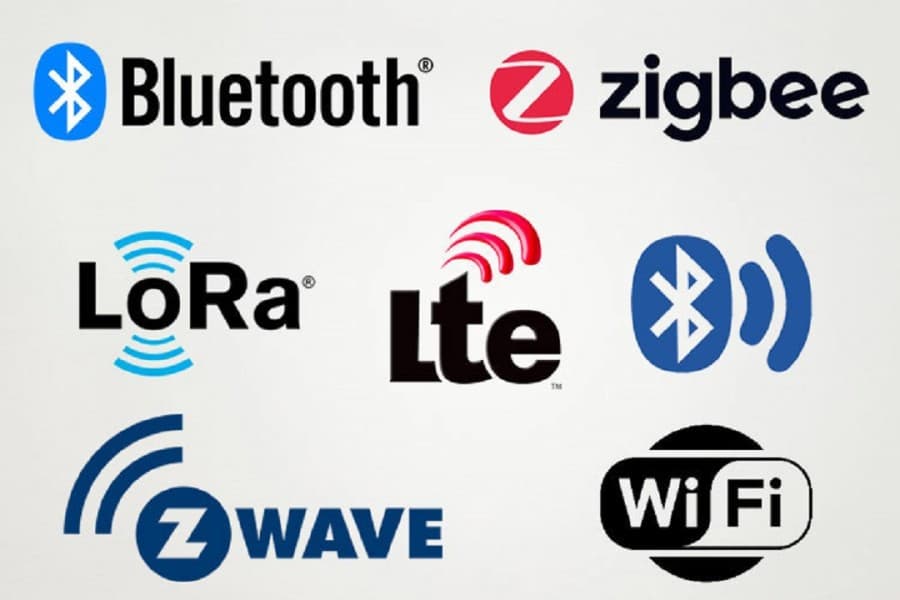
• Hands-on in internet protocols and software development using protocols including LoRA, Wi-Fi, BLE, ZigBee, NB-IoT, M2M,6LoWPAN, Ethernet etc.
• Expert hands-on proficiency in developing applications using one or more technology stacks
• Strong hands-on understanding of scalability, security, high availability, and operational requirements
• Sound and proven decision-making skills to influence the technology choice and implementation methodologies
• Hands-on in object-oriented programming principles, design patterns, and software architecture
• Good with rapid problem solving, a strong technical background, and passion for continuous improvement
• Must have had hands on experience with Connected smart products having Product and Application software, data and Cloud
• Must have intimate knowledge of tools and processes used for Product(firmware) and/or Application software and/or Device hardware and/or Cloud
• Must be intimately familiar with Agile and Scrum, in the creation of dashboards for Sprints. An expectation would be to implement Scrum within the organization
• Must have strong familiarity with SMAC(social media, mobile, analytics and cloud) trends and application to saleable product categories
• Must have worked closely with Mechanical/Electrical/Electronics engineering teams in the development of smart/connected products.


Shubham Vishwakarma
Full Stack Developer - Averlon


About vithamas technologies
About
Vithamas offers end to end design services in the areas of embedded firmware, custom PCB design and mobile applications for clients seeking to create reliable, innovative products while keeping the process cost-effective giving utmost importance to quality and trust.
We specialize in wireless technology product designs with BLE, 2G/LTE/5G, WiFi, GPS, SATCOM, ISM
Tech stack
Candid answers by the company
We provide end to end design services in the areas of embedded firmware, custom PCB design and mobile applications for clients seeking to create reliable, innovative products while keeping the process cost-effective giving utmost importance to quality and trust.
From concept to production to maintenance, we use the best design methodologies to build state-of-the-art electronic systems that meet the increasing demands of today’s technological world. We are your one stop shop for technology product development.
We are in lookout for companies seeking technology development support for their embedded or wireless solutions. We are a one stop solution for your offshore development center where the complete product development in handled under one roof.
Product showcase



Photos
Company social profiles


Similar jobs (7)


 C++
C++ Python
• Design and implement scalable IoT solutions from sensor to cloud, ensuring seamless integration between
vehicle hardware (fuel sensors, GPS trackers, OBD devices) and the Anytime Diesel platform
• Integrate industrial and automotive sensors, microcontrollers, and gateways with the platform
• Develop, optimize, and troubleshoot data flow using protocols such as CAN bus, Modbus, RS485, TCP, and
RTU
• Manage the full IoT device lifecycle across the fleet — provisioning, remote configuration, health monitoring,
and OTA/FOTA firmware updates
• Collaborate with software, data, and operations teams to define data models and ensure clean data ingestion for
fleet analytics
• Conduct testing, debugging, and performance analysis of embedded firmware and IoT systems using tools like
oscilloscopes and logic analyzers
• Create technical documentation — architecture diagrams, API specs, and deployment guides

The recruiter has not been active on this job recently. You may apply but please expect a delayed response.
About the Internship
Nexora Group is seeking enthusiastic students interested in the Internet of Things (IoT) and Embedded Systems. This internship provides hands-on exposure to smart devices, sensor integration, microcontrollers, embedded programming, and IoT-based applications.
Interns will gain practical experience working on real-world projects involving connected devices, automation systems, data collection, and intelligent monitoring solutions while learning industry-relevant technologies.
Key Responsibilities
- Assist in the development of IoT and Embedded Systems projects.
- Work with sensors, microcontrollers, and hardware components.
- Develop and test embedded applications.
- Collect, monitor, and analyze data from IoT devices.
- Support system integration and troubleshooting activities.
- Create technical documentation and project reports.
- Participate in project discussions and team meetings.
- Research emerging IoT and embedded technologies.
Required Skills
- Basic understanding of Electronics and Embedded Systems.
- Familiarity with Arduino, ESP32, Raspberry Pi, or similar platforms.
- Basic knowledge of C, C++, or Python programming.
- Understanding of sensors, actuators, and communication protocols.
- Strong analytical and problem-solving skills.
- Passion for innovation and technology.
Eligibility
- B.Tech, M.Tech, Diploma, B.Sc., M.Sc., or related disciplines.
- Students pursuing Electronics, Electrical Engineering, Embedded Systems, IoT, Computer Science, Instrumentation, Mechatronics, or related fields.
- Freshers and recent graduates are encouraged to apply.
What You Will Learn
✅ Internet of Things (IoT) Fundamentals
✅ Embedded Systems Development
✅ Microcontroller Programming
✅ Sensor & Device Integration
✅ IoT Communication Protocols
✅ Smart Automation Systems
✅ Industry-Oriented Project Development
Benefits
✅ Internship Completion Certificate
✅ Letter of Recommendation (Performance-Based)
✅ Hands-on Industry Project Experience
✅ Professional Mentorship & Guidance
✅ Resume & LinkedIn Profile Enhancement
✅ Portfolio Development Support
✅ Exposure to Real-World IoT Applications

 .NET
.NET C#
C#IoT Engineer – Telematics & C#/.NET
Experience :05+ Years
Location : Ahmedabad
ABOUT MYFMS
MyFMS is Micpoint B.V.'s SaaS platform for fleet, facility, and access management, built on .NET and C#, and hosted on our own private cloud in the Netherlands, spread across two data centers. A key part of MyFMS is its connector layer: the software that links telematics and IoT hardware in the field (such as GPS trackers and CAN-bus interfaces) to the platform. To further build out and standardize this layer, we're looking for an IoT Engineer with C#/.NET development experience.
WHAT YOU'LL DO
• Implement and maintain telematics integrations in C#/.NET on MyFMS's connectors, which link telematics hardware (e.g. GPS trackers and CAN-bus interfaces) to the platform.
• Investigate which configurations, protocol settings, and command sets of supported hardware (e.g. CAN/LVCAN parameters) can serve as a standard, and document them.
• Research and manage firmware versions for telematics devices, and advise on firmware updates and compatibility.
• Translate device-specific protocols into a uniform, reusable data structure within the platform.
• Document device configurations and firmware standards in Markdown for the development team and support organization.
• Work according to our DevOps way of working, integrating your work into the CI/CD pipelines we use for testing and releases.
• Collaborate with the (international) development team on the architecture of the connector layer and contribute to the technical roadmap.
• Support troubleshooting of field issues, such as connectivity or synchronization problems with hardware.
• Build simulators for telematics hardware, so protocols, configurations, and firmware behavior can be tested without needing physical devices.
• Use AI, and work with and train models, to build simulations and test setups.
• Ensure the connector integrations are fully testable (including unit and integration tests), safeguarding the quality of the telematics integrations.
WHAT THE ROLE REQUIRES
• Bachelor's/Master's level thinking and working ability in a technical field, e.g. Electrical Engineering, Embedded Systems, Computer Science, or similar.
• Demonstrable experience with software development in C#/.NET.
• Affinity with or experience in IoT/telematics hardware, such as GPS trackers, CAN-bus interfaces, and sensors.
• Experience with Ruptela, Teltonika, and Digital Matter hardware is a plus.
• Knowledge of communication protocols such as CAN, LVCAN, OBD-II, MQTT, and/or TCP/IP is a plus.
• Experience reading, configuring, or updating firmware on embedded devices is a plus.
• Experience building test or simulation tools (e.g. device or protocol simulators) and with test automation (unit/integration tests) is a plus.
• Experience with DevOps practices and CI/CD pipelines (incl. Azure DevOps) is a plus.
• Affinity with AI/machine learning, for example training models for simulations and test setups, is a plus.
• You're analytical and structured: you enjoy bringing order to a wide range of device configurations and documenting what you find.
• You value quality assurance and structurally build testability into your own work.
• You're proficient in English, spoken and written (the team's working language); Dutch is not required.
The recruiter has not been active on this job recently. You may apply but please expect a delayed response.
C++CJob Description – Embedded Application Engineer (4–6 Years Experience)
Position
Embedded Application Engineer
Experience
4–6 Years
Location
Hyderabad
Job Summary
We are seeking a highly motivated Embedded Application Engineer with 4–6 years of experience in developing, deploying, and maintaining embedded software applications on Linux-based platforms. The ideal candidate should possess strong programming skills in Go, C/C++, Linux, and Python, leverage modern AI-assisted development tools such as Cursor, and have experience working with industrial communication protocols, messaging systems, and DevOps automation pipelines.
The role involves designing edge applications, integrating industrial devices, implementing secure communication frameworks, and enabling scalable deployment and lifecycle management across ARM and AMD-based hardware platforms.
Key Responsibilities
· Design, develop, and maintain embedded applications for Linux-based edge devices.
· Develop high-performance software components using Go, C/C++, Linux, and Python.
· Utilize AI-powered coding assistants (e.g., Cursor) to improve development productivity and code quality.
· Implement and integrate communication protocols such as:
o MQTT
o Sparkplug B
o JSON-based messaging interfaces
o Industrial protocols (Modbus preferred)
· Build edge-to-cloud data communication services and telemetry pipelines.
· Develop software for ARM and AMD processor architectures.
· Create automated CI/CD pipelines using CircleCI and related DevOps tools.
· Implement automated testing, deployment, and release processes.
· Perform debugging, profiling, and performance optimization for embedded systems.
· Collaborate with product, cloud, and platform engineering teams to deliver scalable and secure solutions.
· Support software configuration, packaging, deployment, and version management.
· Contribute to system monitoring, diagnostics, and fleet lifecycle management.
Required Skills & Qualifications
Programming Languages
· Strong proficiency in:
o Go
o C/C++
o Python
o Linux Application development
· Experience using AI-assisted coding tools such as Cursor or similar developer productivity tools.
Embedded & Platform Expertise
· Strong experience with:
o Linux-based embedded development
o Application-level debugging
o ARM and AMD processor architectures
o Multi-threaded and concurrent application design
Communication & Protocols
· Hands-on experience with:
o MQTT
o Sparkplug B
o JSON message structures and APIs
· Familiarity with industrial communication protocols:
o Modbus (preferred)
DevOps & Automation
· Experience with:
o CircleCI
o Continuous Integration (CI)
o Continuous Delivery/Deployment (CD)
o Automated testing frameworks
o Version control systems (Git)
Device & Fleet Management
· Experience with:
o Software packaging and deployment
o Remote device management
o Fleet monitoring and maintenance
o Canonical Snap package management
Preferred Qualifications
· Experience in IoT, Edge Computing, Building Automation, Industrial Automation, or HVAC domains.
· Familiarity with container technologies (Docker/Podman).
· Understanding of cybersecurity practices for embedded devices.
· Experience with cloud integration (AWS, Azure, or GCP).
· Knowledge of telemetry, diagnostics, and remote software update mechanisms.
Key Competencies
· Strong problem-solving and debugging skills.
· Excellent communication and collaboration abilities.
· Ability to work independently in agile development environments.
· Focus on software quality, maintainability, and reliability.
· Passion for automation and modern software engineering practices.
Nice-to-Have Domain Experience
· IoT Edge Platforms
· Industrial Automation Systems
· Building Management Systems (BMS)
· HVAC Controls and Equipment Connectivity
· Smart Building and Energy Management Solutions
Experience Range: 4–6 Years
Education: Bachelor's or Master's degree in Computer Science, Electronics, Electrical Engineering, Embedded Systems, or a related field.
We are hiring an Embedded Software Engineer to develop firmware and low-level software for embedded devices and connected products.
Responsibilities
- Develop firmware in Embedded C and C++ for microcontroller-based systems
- Build real-time applications on RTOS platforms such as FreeRTOS
- Write and maintain device drivers for peripherals (UART, SPI, I2C, CAN)
- Develop and customise Embedded Linux components
- Debug hardware and software issues using oscilloscopes, JTAG and debuggers
- Work with hardware teams on board bring-up and testing
Requirements
- 1+ years of experience in embedded software development
- Strong Embedded C and C++ programming skills
- Hands-on experience with microcontrollers (ARM Cortex, STM32, ESP32 or similar)
- Experience with RTOS and device driver development
- Exposure to Embedded Linux is a plus
 C++Python
 Javascript
Technical Lead – Embedded Software Application Projects
link: https://www.ziliconcloud.com/careers
ZILICONCLOUD PRIVATE LIMITED is looking for an experienced Technical Lead with 5–8 years of industry experience in Embedded Systems, IoT, AI, Cloud, and Software Engineering.
The candidate will lead Embedded, IoT, Edge AI, and Cloud projects, define system architecture, convert requirements into technical tasks, and ensure successful project execution and delivery.
Key Responsibilities
- Design modular system architectures for Embedded, IoT, Edge AI, Cloud, REST APIs, and dashboards.
- Convert requirements into clear tasks, milestones, and deliverables.
- Track project progress, manage technical risks, and ensure on-time delivery.
- Guide engineers on coding standards, Git, testing, debugging, and documentation.
- Troubleshoot issues across hardware, firmware, IoT, cloud, backend, and UI.
- Support system integration, testing, debugging, and performance improvement.
- Review technical designs, code, and test results.
- Lead prototype development, integration, technical reviews, and demonstrations.
- Mentor young engineers and explain complex technical concepts in a simple and practical way.
Required Skills
C/C++, Python, JavaScript/TypeScript, Linux, FreeRTOS, Microcontrollers, REST APIs, MQTT, Git, Embedded Software, IoT, and system debugging.
Preferred: AWS IoT, Microsoft Azure, ThingsBoard, OpenCV, TensorFlow Lite (TFLite), React, Flutter, or FastAPI.
Education
B.E./B.Tech/M.E./M.Tech in ECE, CSE, Embedded Systems, Mechatronics, or a related field.
📍 Location: East Tambaram, Chennai, Tamil Nadu
💼 Experience: 5–8 Years
🕒 Employment Type: Full-Time
About Jinn
Jinn is a Voice AI Tech Company. It helps businesses get better RoI specially by helping sales processes with the use of Voice AI Tech. We are adding a business line which includes an audio device that can reliably capture audio in various environments.
About role:
- This Role in a B2B SaaS startup in AI space led by 2X entrepreneurs from IIT, IIMs. Fast paced with a lot of learning and growth.
- Responsibility: Helping engineer/assemble/bring together an IoT/ hardware device that can accomplish product goals with required constraints. Great high stakes exposure for fresh grads
- Duration: 3-6 months internship || Converts to Full Time based on performance
- Compensation (Stipend): 20-25k per month || Full time 4.5lpa - 6LPA
Ideal Profile: Interested in building a career in IoT/Tech, good communication, good discipline, solid understand of tech (AI)
Skill Sets
Look for someone who:
• Has built at least 1 IoT project end-to-end
• Knows Arduino + one of ESP32 / nRF52
• Has touched audio input (even basic)
• Is comfortable debugging hardware (this is key)
1. Embedded Systems Programming (Must-have)
• C/C++ (Arduino framework or ESP-IDF)
• Working with:
* ESP32 OR
* Seeed Studio XIAO BLE nRF52840 Sense
• Skills:
* GPIO, I2S (for mic input)
* Power modes (deep sleep, wake triggers)
* Memory constraints (huge in audio use cases)
👉 This is the backbone. If they can’t do this well, project stalls.
2. Audio Handling + Signal Basics
• Understanding:
* Sampling rate (16kHz vs 44.1kHz)
* PCM audio buffers
* Latency vs quality trade-offs
• Practical skills:
* Using I2S microphones (INMP441, etc.)
* Basic noise filtering
* Voice Activity Detection (VAD)
👉 Without this, you’ll just get noisy unusable recordings.
3. Power & Hardware Basics (Often underestimated)
• LiPo battery handling
• Charging IC (TP4056 type)
• Power optimization:
* Sleep modes
* Sampling intervals
Many prototypes fail here (battery drains in 1 hour 😅)
4. Connectivity (BLE / WiFi)
• BLE (for XIAO nRF52840):
* Data chunking (BLE MTU limits!)
* Pairing + mobile relay model
• WiFi (for ESP32):
* HTTP / WebSocket streaming
* Retry + buffering
Trade












 Follow Cutshort
Shubham Vishwakarma
Full Stack Developer - Averlon