
Senior AI Engineer at Unico Connect Private Limited · Mumbai · 5 - 8 years · Profitable · Posted 16 Sep 2026


 Python
 Amazon Web Services (AWS)
Senior AI Engineer
Code Generation, Agent Architecture & LLM Systems
📍 Mumbai (On-site) | Full-time | 5+ years
About the Role:
Unico Connect is an AI-first technology partner that builds custom mobile, web, and AI products for clients across multiple geographies.
We are hiring a Senior AI Engineer for a dedicated client engagement focused on building an AI-powered application builder platform - a product where users describe software in plain English and the system generates, previews, and iteratively refines working code.
The mandatory requirement for this role is hands-on production experience shipping LLM-powered systems with agent architectures, with experience in code generation or developer tooling contexts a strong advantage.
The role is product-focused and deeply hands-on. You will own everything between the user's prompt and correct code landing in the project: the agentic loop, code generation pipeline, context management, evaluation suite, and model cost strategy.
You will work alongside the Senior MLOps Engineer who operationalises the infrastructure around your system, and collaborate closely with backend, frontend, and DevOps engineers.
Responsibilities:
Agent Architecture
Design and own the agentic loop for the platform - request interpretation, planning, tool-calling sequence (read file, edit file, run build, search code, install package), and stop conditions.
Make and revisit architectural decisions on single-agent vs. multi-agent designs, including planner/executor splits and dedicated build-repair sub-agents.
Code Generation Pipeline
Own the end-to-end generation flow: task classification, context gathering, planning, targeted edits, verification, and commit.
Implement diff/search-replace-based file editing with fuzzy matching and fallback strategies.
Enforce scope discipline so the agent makes minimal diffs and does not modify code it was not asked to touch.
Self-Repair Loop
Build and tune the automated repair loop that pipes compiler, lint, build, and runtime errors back to the model with retry budgets and model escalation.
This loop is the primary quality lever - the difference between 60-70% and 90%+ build success rates.
Context Management
Build file-relevance retrieval so the agent sees the right files, not the whole codebase: dependency graphs, AST/tree-sitter-based chunking, embeddings, recency signals, and hybrid retrieval.
Implement conversation summarisation and memory for long sessions, and address long-project degradation through codebase summaries and periodic consistency passes.
Own token budgeting and prompt caching strategy.
Prompt Engineering as a Discipline
Own the system prompt and per-task prompt variants (new feature, bug fix, styling change).
Maintain few-shot examples and enforce coding conventions, stack rules, and prohibited behaviours such as no hardcoded secrets and no whole-file rewrites.
Version prompts like code with changelogs and rollback capability.
Evaluation and Quality Measurement
Design and own the evaluation suite: representative test prompts run on every prompt and model change, scored on build success rate, instruction adherence, and output quality including LLM-as-judge and visual/screenshot checks where relevant.
Define regression gates that block quality-degrading changes from shipping.
Treat evals the way engineers treat automated testing: versioned, automated, and tracked over time.
This responsibility is non-negotiable at this level.
Model Strategy and Cost
Design model routing - cheap and fast models for classification and small edits, frontier models for complex generation.
Drive cost optimisation through prompt caching, diff-based edits over full-file rewrites, and tighter context selection.
Track cost per agent run and tokens per task; evaluate new model releases against the eval suite and lead migrations when results justify it.
Safety and Reliability of Agent Behaviour
Defend against prompt injection from user content and fetched web content.
Ensure secrets never appear in generated client code.
Define what the agent's tools may and may not do in collaboration with the platform team.
Contribute to output moderation and abuse-pattern awareness.
Mentorship and Engineering Standards
Run code reviews, define engineering conventions for AI work, and raise the engineering bar across the AI team.
Work closely with the Senior MLOps Engineer on handoff of eval design, prompt configurations, and model routing logic.
Requirements:
Hands-on Production Ownership of LLM-Powered Systems with Agent Architectures (Mandatory)
Must have personally shipped and operated at least one complex production AI system - agentic, multi-step, or code generation - with end-to-end ownership of architecture, evaluation, and cost.
POCs, internal demos, and tutorial-grade work do not qualify.
5+ Years of Professional Software or AI Engineering Experience
With at least 3 years focused on LLM applications, AI engineering, or production AI systems.
Candidates with strong backend backgrounds and a clear, substantive pivot into LLM systems qualify.
Strong Python Proficiency and Service Development
Production-grade Python with FastAPI or equivalent: type hints, async patterns, streaming responses, testing, and packaging.
Not notebook-only.
Depth Across LLM APIs and Agent Systems
Production experience with at least two of OpenAI, Anthropic Claude, Google Gemini, or open-weight models (vLLM, Ollama, Together).
Production experience with at least one agent framework (LangGraph, CrewAI, AutoGen, LlamaIndex Agents) or hand-rolled equivalent.
Hands-on with tool calling, structured outputs, and multi-step reasoning.
Demonstrated, Systematic Evaluation Practice - Non-Negotiable
Must have built evaluation harnesses that gate production releases, not ad-hoc testing.
Hands-on with at least one of LangSmith, Langfuse, Promptfoo, Ragas, or DeepEval.
Candidates with no systematic answer to evaluation should not be considered at senior level regardless of other strengths.
Cost Discipline for Production AI
Track record of measurable cost optimisation on production AI features.
Able to speak in specifics: cost per request, savings achieved through caching or model routing, context reduction decisions.
AWS Working Knowledge
Hands-on with EC2, S3, IAM, and Docker.
Comfort with CI/CD workflows and deploying AI services.
Awareness of LLM Security Failure Modes
Familiar with prompt injection patterns, understands that system prompt rules alone are insufficient, and has experience with output validation and content safety in production.
Nice to Have
- Experience with AST/tree-sitter tooling, diff-based editing systems, or compiler-adjacent work
- MCP server authoring
- Open-source AI contributions
- Published technical writing on LLM systems
- Multi-modal model experience
- Fine-tuning exposure (LoRA, QLoRA, PEFT)


Shubham Vishwakarma
Full Stack Developer - Averlon


About Unico Connect Private Limited
About
Photos
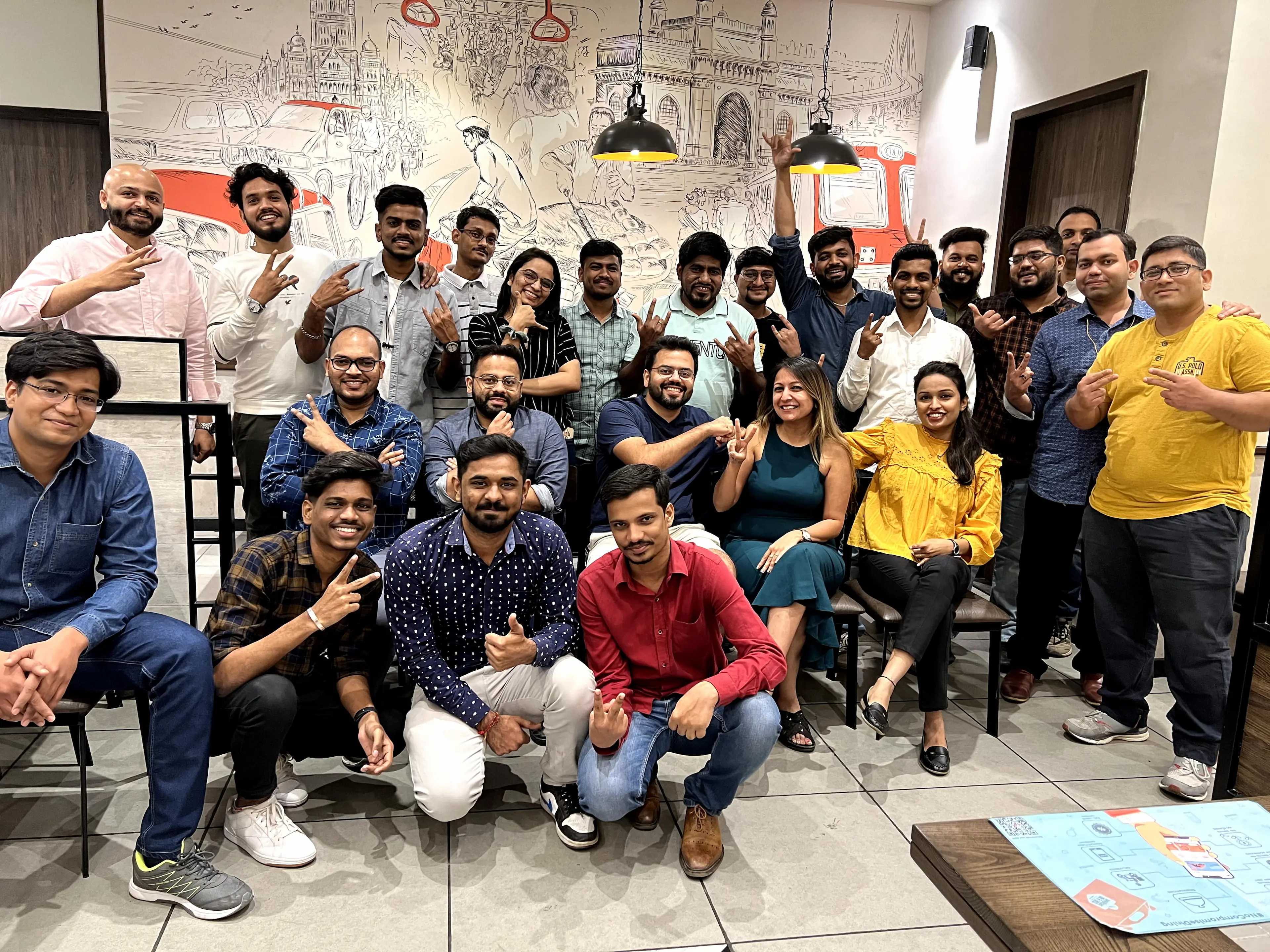
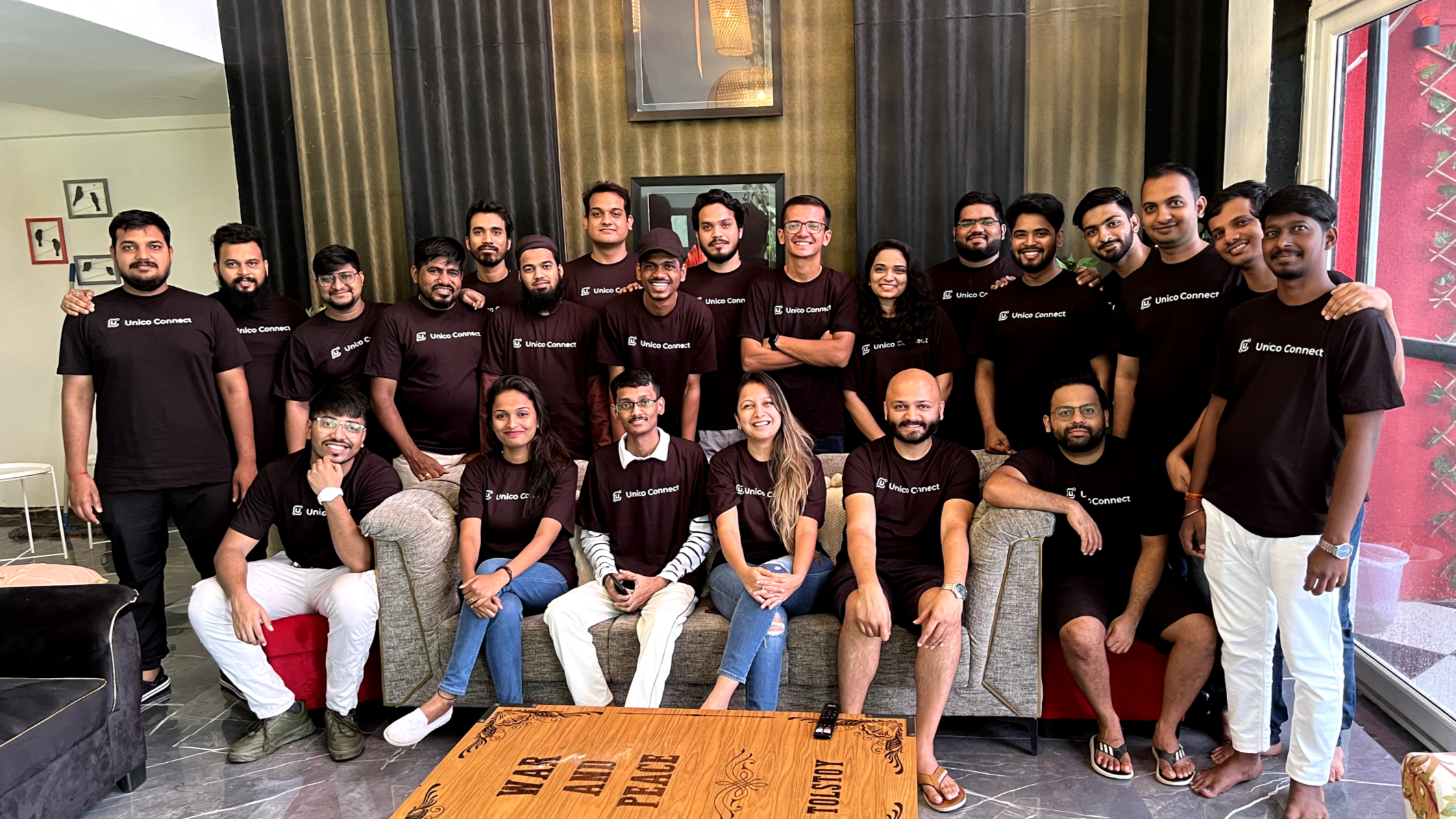
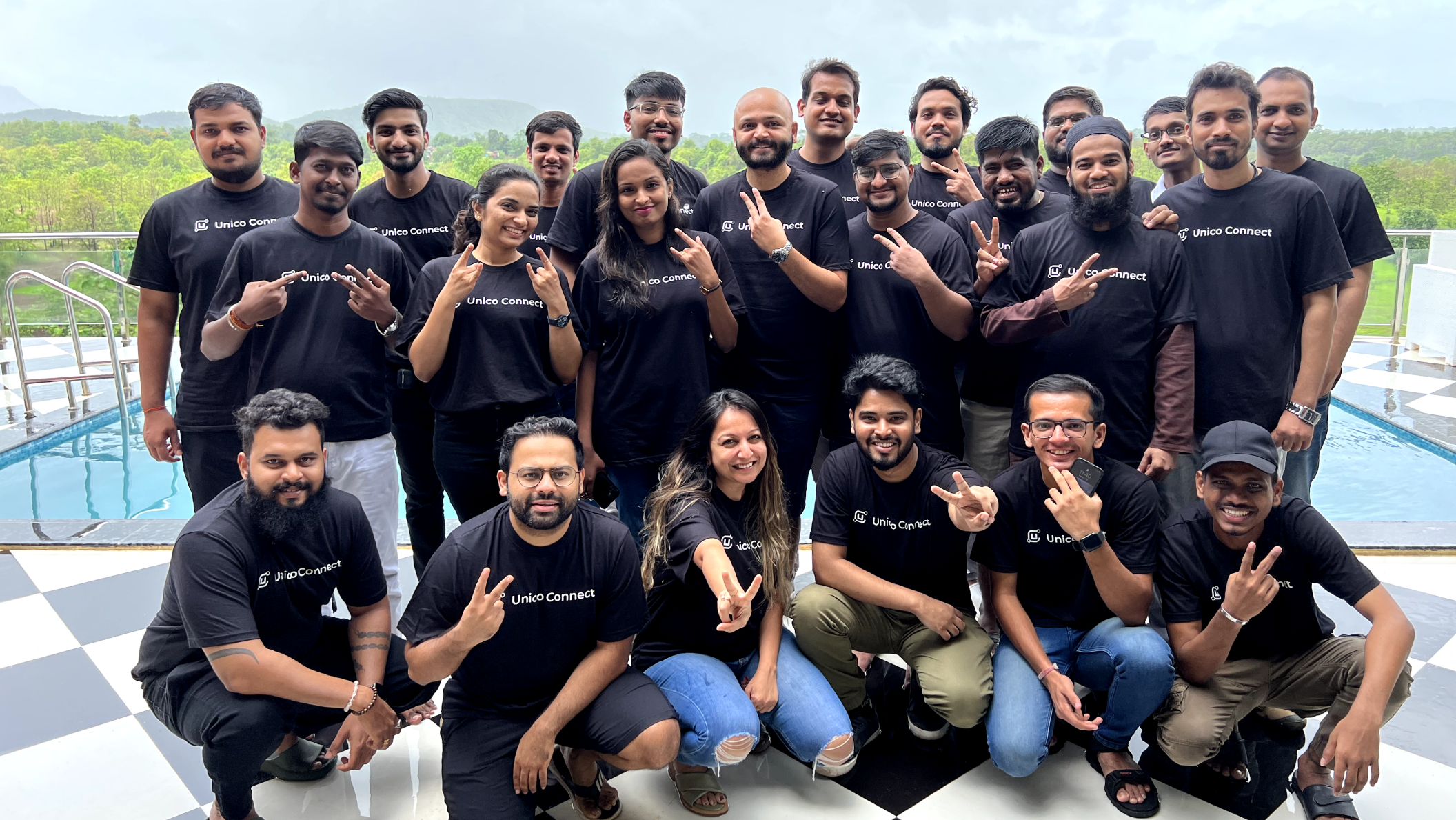
Company social profiles


Similar jobs (10)
 Python
Applied AI Engineer
About the Role
We are building an AI-powered platform that transforms credit origination by automating manual processes and enabling lenders to underwrite more loans with greater accuracy and lower risk.
We are looking for an experienced Applied AI Engineer to design and build production-grade Agentic AI systems capable of complex, multi-step reasoning across financial data, legal documents, and other unstructured information.
As an early engineering team member, you will take ownership of core AI architecture, multi-agent orchestration, reasoning workflows, evaluation frameworks, and scalable AI infrastructure.
Key Responsibilities
- Design and develop stateful, multi-agent AI systems for complex reasoning and decision-making.
- Build and optimize LLM pipelines using frameworks such as LangChain, DSPy, and GEPA.
- Implement RAG, prompt optimization, memory management, tool integration, and human-in-the-loop workflows.
- Develop AI evaluation frameworks using LLM-as-a-Judge and scenario-based testing.
- Implement AI observability and monitoring to track accuracy, latency, cost, and system performance.
- Build ETL pipelines and work with structured and unstructured data, SQL/NoSQL databases, vector databases, and graph-based data models.
- Integrate external tools and systems using modern agent protocols such as Model Context Protocol (MCP).
- Deploy and maintain AI services on AWS or Azure.
- Implement CI/CD pipelines, containerization, and Infrastructure as Code for reliable production deployments.
Required Qualifications
- 5+ years of professional software development experience in Python or JavaScript.
- Proven experience building and deploying production-level Agentic AI systems or complex LLM reasoning applications.
- Hands-on experience with LangChain and LLMOps, including tools such as Langfuse, Weights & Biases (W&B), or Helicone.
- Strong understanding of LLMs, RAG, prompt engineering, multi-agent orchestration, memory management, and tool calling.
- Experience with DSPy, GEPA, or advanced LLM inference and optimization techniques.
- Strong data engineering fundamentals, including ETL, SQL/NoSQL databases, and vector databases.
- Familiarity with MCP and human-in-the-loop workflows.
- Experience with AWS or Azure and modern DevOps practices, including Docker, CI/CD, and Infrastructure as Code.
Good to Have
- Experience with RLHF or RLAIF.
- Knowledge of model fine-tuning techniques such as LoRA and QLoRA.
- Experience with graph databases and graph-based data models.
- Exposure to financial services, credit underwriting, risk analysis, or document-intensive AI applications.
Why Join Us?
- Work on advanced Agentic AI and complex reasoning systems beyond conventional chatbot applications.
- Build foundational AI architecture and production-grade LLM workflows.
- Take ownership of technical decisions and system design as an early engineering team member.
- Solve challenging problems at the intersection of AI, finance, and intelligent automation.


The recruiter has not been active on this job recently. You may apply but please expect a delayed response.
PythonAI Engineer
LLMs, Agents & AI Services
📍 Mumbai (On-site) | Full-time | 2-4 years
About the Role:
Unico Connect is an AI-first technology partner that builds custom mobile, web, and AI products for clients across multiple geographies.
AI is core to how we design, deliver, and scale software for our customers.
We are hiring an AI Engineer for a dedicated client engagement building a complex production AI platform, working on the AI capabilities and agentic features at the core of the product.
The mandatory requirement for this role is at least one AI feature personally shipped to production for real users, with operational ownership.
The role suits someone who thinks quickly on solutioning, can take an ambiguous problem to a working prototype in days, and has the discipline to carry it through to production with predictable economics.
You will work alongside the Senior AI Engineer and the wider pod, with ownership of parts of the AI surface area of the product.
Responsibilities:
Solutioning and POCs
Translate ambiguous customer problems into working POCs at speed.
Pick the right model, framework, and architecture, and demonstrate value early before scaling investment.
LLM Application Development
Build AI features and services using LLM APIs from OpenAI, Anthropic, Google, and self-hosted open-weight models (Llama, Qwen, Mistral).
Choose the right model per use case based on cost, latency, capability, and context-window trade-offs.
Agentic System Design
Design and implement agentic workflows using LangGraph, CrewAI, AutoGen, LlamaIndex Agents, or custom orchestration.
Cover tool use, planning, memory, and multi-step reasoning appropriate to the problem.
API and Service Development
Build production AI services and APIs using Python and FastAPI.
Handle streaming responses, async processing, structured outputs, retries, and graceful degradation when models or tools fail.
Retrieval and Tool Integration
Implement RAG pipelines with vector databases (Pinecone, Weaviate, Qdrant, pgvector, Chroma), embeddings, chunking strategies, hybrid search, and reranking.
Integrate external tools, internal APIs, and document sources through tool-calling and MCP-style patterns.
Cost Analysis and Unit Economics
Model the per-request and per-user cost of every AI feature before it ships.
Track token usage, prompt caching, batching, and model-routing strategies.
Drive measurable improvements in unit economics.
Production Hardening
Add observability and tracing (LangSmith, Langfuse, OpenTelemetry), guardrails, content safety checks, prompt injection defences, and fallback behaviour.
Prompt Engineering and Evaluation
Design, test, and iterate prompts with measured outcomes.
Build evaluation harnesses for accuracy, hallucination, latency, and cost.
Run benchmarks across models and prompt variants before locking in a design.
Requirements:
AI Feature Shipped to Production (Mandatory)
Must have personally built and shipped at least one AI feature that runs in production for real users, with operational ownership.
POCs, internal demos, and one-off scripts do not qualify.
2 to 4 Years of Professional Software or AI Engineering Experience
With at least one production AI feature owned end to end.
Strong Python Proficiency and API Development with FastAPI
Comfort with type hints, async, packaging, testing, streaming responses, and authentication.
Production-grade Python, not notebook-only code.
Hands-on Depth Across the LLM and Agent Stack
Working experience with at least two of OpenAI, Anthropic Claude, Google Gemini, or self-hosted open-weight models (vLLM, Ollama, Together, Replicate).
Working familiarity with at least one agent framework (LangGraph, CrewAI, AutoGen, LlamaIndex Agents) or hand-rolled equivalent.
Working knowledge of RAG, embeddings, and vector databases (Pinecone, Weaviate, Qdrant, pgvector, Chroma).
Solutioning Speed and POC Velocity
Demonstrated ability to move from a fuzzy problem to a working prototype in days.
Strong instinct for what to build first, what to defer, and what to throw away.
Cost Discipline for Production AI
Ability to calculate, monitor, and optimise the cost of LLM APIs, tokens, embeddings, vector store usage, and infrastructure.
Treats unit economics as a first-class concern.
AWS Familiarity
Working knowledge of EC2, S3, IAM, and at least one of Bedrock, SageMaker, or equivalent.
Comfortable in a Fast-Moving Environment
Self-directed, comfortable with ambiguity, takes ownership without being asked, and ships under shifting priorities.
Strong Written and Spoken English Communication
Able to explain trade-offs to non-AI engineers, designers, product managers, and clients in plain language.
Nice to Have
- fine-tuning or LoRA, QLoRA, PEFT exposure
- MCP server authoring
- eval framework experience (LangSmith, Promptfoo, Ragas, DeepEval)
- open-source AI contributions
- multi-modal models (vision, audio)

About LeadSquared
LeadSquared is a leading sales execution and marketing automation platform trusted by 2,000+ businesses globally, including healthcare, education, financial services, and real estate. Headquartered in Bengaluru with offices across the US, UK, UAE, and Southeast Asia, we empower sales teams to close faster, smarter, and at scale.
Our AI team is at the forefront of integrating cutting-edge large language model capabilities into enterprise workflows — building intelligent agents, copilots, and automation systems that redefine how businesses operate.
Role Overview
We are looking for a Senior AI Engineer with hands-on experience building LLM-powered agents and agentic AI systems. You will design, develop, and deploy autonomous AI pipelines that solve complex, multi-step business problems — from lead qualification and follow-up automation to intelligent CRM workflows and beyond.
This role is ideal for someone who is deeply excited about the frontier of AI, can move fast, and wants their work to directly impact millions of sales professionals worldwide.
Key Responsibilities
•
Design and build LLM-powered agentic systems using frameworks such as LangChain, LlamaIndex, AutoGen, or CrewAI to automate complex, multi-step workflows.
•
Develop and maintain Retrieval-Augmented Generation (RAG) pipelines with vector databases (Pinecone, Weaviate, Chroma, pgvector) for domain-specific knowledge grounding.
•
Build and integrate tool-use and function-calling capabilities into AI agents, enabling dynamic interaction with internal APIs, databases, and third-party services.
•
Implement prompt engineering strategies including chain-of-thought, few-shot prompting, and structured output parsing to ensure reliable agent behavior.
•
Design evaluation frameworks and observability pipelines (LangSmith, Helicone, custom metrics) to monitor agent performance, accuracy, and cost.
•
Collaborate with product, sales, and domain teams to translate business requirements into AI-driven solutions and features.
•
Optimize LLM inference for latency and cost using techniques like caching, model distillation, quantization, and batching.
•
Stay current with the rapidly evolving LLM ecosystem and proactively propose improvements and new approaches.
•
Contribute to internal best practices, documentation, and knowledge-sharing across the engineering org.
Required Qualifications
Experience
•
2–4 years of professional software engineering experience, with at least 1–2 years focused on LLM/AI systems.
•
Proven experience shipping LLM-based products or agentic AI systems into production environments.
Technical Skills
•
Strong proficiency in Python and familiarity with async programming patterns for AI pipelines.
•
Hands-on experience with LLM APIs: OpenAI (GPT-4o), Anthropic (Claude), Google (Gemini), or open-source models (Llama, Mistral).
•
Experience with agentic frameworks: LangChain, LangGraph, LlamaIndex, AutoGen, CrewAI, or similar.
•
Solid understanding of RAG architectures, embedding models, and semantic search.
•
Experience with vector databases and similarity search infrastructure.
•
Knowledge of REST APIs, microservices architecture, and containerization (Docker/Kubernetes).
Problem-Solving & Mindset
•
Strong ability to decompose ambiguous, open-ended problems into structured AI system designs.
•
Experience with prompt debugging, LLM evaluation, and iterative refinement workflows.
•
Ability to balance research exploration with engineering pragmatism to ship reliable systems.
Preferred Qualifications
•
Experience with multi-agent orchestration and agent memory systems (short-term and long-term).
•
Familiarity with fine-tuning or RLHF workflows for domain adaptation.
•
Background in NLP, information retrieval, or conversational AI.
•
Prior experience in B2B SaaS or CRM domain is a plus.
•
Contributions to open-source AI/ML projects or published research/blogs.
•
Experience with cloud platforms: AWS, GCP, or Azure — particularly AI/ML services
 Python
Role Overview
We are looking for an experienced AI/ML Engineer with strong expertise in Python, Generative AI, LLMs, LangChain, and LangGraph. The candidate will be responsible for designing and developing AI-powered applications, intelligent agents, and scalable LLM-based solutions.
Key Responsibilities
- Design and develop AI/ML and Generative AI applications using Python and modern LLM technologies.
- Build LLM-based applications and AI agents using LangChain and LangGraph.
- Develop agentic workflows involving tool calling, memory, reasoning, and multi-step orchestration.
- Integrate LLMs such as OpenAI, Azure OpenAI, Anthropic, Gemini, or other foundation models.
- Develop RAG (Retrieval-Augmented Generation) pipelines using vector databases.
- Work with embeddings, prompt engineering, semantic search, and document processing.
- Develop scalable APIs and backend services using Python, FastAPI, or Flask.
- Build and integrate AI solutions with existing applications and enterprise systems.
- Deploy and maintain AI/ML solutions on cloud platforms.
- Collaborate with data scientists, software engineers, and product teams to develop business-focused AI solutions.
Required Skills
- Strong hands-on experience in Python programming.
- Strong experience in AI/ML and Generative AI.
- Hands-on experience with LLMs and LLM-based application development.
- Strong experience with LangChain and/or LangGraph.
- Experience building AI Agents / Agentic AI workflows.
- Strong understanding of RAG, embeddings, vector databases, and prompt engineering.
- Experience with vector databases such as FAISS, Pinecone, Chroma, Weaviate, or Azure AI Search.
- Experience developing REST APIs using FastAPI/Flask.
- Good understanding of Machine Learning, NLP, and deep learning concepts.
- Experience with Azure / AWS / GCP cloud platforms.
Good to Have
- Experience with multi-agent systems and agent orchestration.
- Knowledge of MLOps / LLMOps.
- Experience with Docker, Kubernetes, and CI/CD.
- Knowledge of LLM evaluation, monitoring, observability, and AI governance.
- Experience with Azure OpenAI, Azure AI Foundry, or AWS Bedrock.


The recruiter has not been active on this job recently. You may apply but please expect a delayed response.
PythonJob Description:
We are looking for a hands-on AI Engineer with experience in Generative AI and Agentic AI to build and deploy production-ready AI solutions.
Key Responsibilities:
- Develop and deploy GenAI and Agentic AI applications.
- Build RAG pipelines, LLM workflows, and AI agents.
- Develop solutions using Python, LangChain, LangGraph, LlamaIndex, or similar frameworks.
- Implement tool calling, context retrieval, and LLM orchestration.
- Integrate AI solutions with APIs and cloud platforms.
- Work with AWS/Azure/GCP, Docker, and CI/CD.
Required Skills:
- Strong Python programming skills.
- 3+ years of GenAI/Agentic AI experience.
- RAG and LLM orchestration.
- LangChain / LangGraph / LlamaIndex / AutoGen / CrewAI / Semantic Kernel.
- MCP and A2A knowledge.
- Cloud, APIs, Docker, and CI/CD experience.
Preferred Experience:
Hands-on experience building and deploying production-ready AI solutions.

 Go Programming (Golang)Amazon Web Services (AWS)
 PostgreSQL
Most sales tools help you send emails. We’re building something different.
At Salesforge, we’re creating autonomous AI agents that can:
Find the right prospects
Generate highly personalized outreach
Run conversations
And book meetings
All without human involvement.
Why this is interesting
A lot of AI products stop at “generate text.” We’re focused on outcomes.
That means solving problems like:
How do you generate messages that actually get replies?
How do you evaluate and improve agent performance over time?
How do you orchestrate millions of AI-driven interactions reliably?
How do you combine structured data + LLMs in a way that scales?
If you enjoy working at the intersection of systems + AI + real-world feedback loops, this will feel like a playground.
What you’ll be working on
You won’t be maintaining legacy systems.
You’ll be:
Designing and building core backend systems that power our AI agents
Creating APIs and services that handle high-scale, real-time workflows
Working with queues (Kafka / SQS / RabbitMQ) to orchestrate async systems
Thinking deeply about performance, cost, and reliability in AI pipelines
Shipping features end-to-end with a small, senior team
The team
We’re a small group of experienced builders. We move quickly, care about quality, and avoid unnecessary process.
No layers of management.
No long planning cycles.
Lots of ownership and autonomy.
What we’re looking for
5+ years of backend engineering experience
Strong system design fundamentals
Experience with distributed systems and async processing
Familiarity with relational and/or document databases
Clear communicator, low ego, high ownership
Why join
You’ll work on a product where the output is measurable (meetings booked, revenue generated)
You’ll have real ownership from day one
You’ll be early in building a new category (AI sales agents)
You’ll grow as fast as we do


Role Overview
We are looking for an AI Engineer to design, build, and ship production AI systems, including agentic AI applications, for enterprise clients. This is a hands-on engineering role: you will write production code, build and evaluate models and agents, and work closely with architects and product teams to take solutions from prototype to scale.
Key Responsibilities
Design and build agentic AI systems: agent workflows, tool/function-calling, memory, and human-in-the-loop patterns. Build and productionise RAG pipelines, prompt-based applications, and LLM integrations across providers. Develop and maintain data and ML pipelines: feature engineering, model training, evaluation, and monitoring. Integrate AI systems with enterprise applications (CRMs, ERPs, ITSM tools) via APIs, events, and MCP-based tool servers. Implement guardrails, prompt-injection defences, and evaluation frameworks to keep AI systems safe and reliable in production.
Write clean, tested, production-grade code and participate actively in code and design reviews.
Collaborate with architects, product managers, and delivery teams to translate requirements into working AI solutions. Troubleshoot and optimise AI systems for accuracy, latency, and cost in production.
Required Qualifications
8–12 years of hands-on software engineering experience, with a strong, unbroken technical track record. Hands-on experience building and shipping AI/ML systems in production, not just POCs.
Practical experience with agentic AI systems and at least one major agent framework (LangGraph, CrewAI, AutoGen, OpenAI Agents SDK, Bedrock Agents/Strands, or Semantic Kernel).
Experience with LLM/GenAI systems: RAG pipelines, prompt engineering, structured outputs, and tool calling across providers.
Strong Python skills (TypeScript/Node.js a plus), with production-grade testing, CI/CD, and API design practices. Working knowledge of ML fundamentals: model evaluation, feature engineering, and experimentation. Cloud-native experience on AWS and/or Azure: containers, serverless, event backbones, and vector databases. Understanding of LLM safety and reliability practices: guardrails, prompt-injection defences, and observability.

Design and develop Agentic AI systems using LLMs, tools, memory,
workflows, and MCP.
Build production-grade RAG pipelines, including ingestion, chunking,
embeddings, retrieval, reranking, and evaluation.
Implement context engineering strategies for improving LLM accuracy,
relevance, and reliability.
Develop and integrate MCP-based tools and services for AI agents.
Work with LLMs, SLMs, quantized models, and model optimization
techniques for efficient inference.
Develop scalable backend services and APIs for AI applications.
Design databases and data models supporting AI/agentic applications.
Implement AI observability covering latency, token usage, cost, failures,
quality, and agent/tool execution.
Apply AI governance and responsible AI practices, including security,
access control, data privacy, and auditability.
Optimize AI systems for latency, scalability, cost, and reliability.
Collaborate with engineering and product teams to take AI solutions from
POC to production.
Strong hands-on experience with GenAI, LLMs, and Agentic AI.
Experience building RAG applications.
Strong understanding of Context Engineering and prompt/context
optimization.
Role Overview
We are looking for a hands-on AI/ML Engineer to design, develop, and deploy
production-ready GenAI and Agentic AI applications. The role involves building
intelligent agents, RAG pipelines, AI APIs, backend services, and scalable AI
infrastructure with a strong focus on context engineering, observability,
governance, and model optimisation.
Key Responsibilities
Required Skills
Practical experience with MCP (Model Context Protocol).
Experience with frameworks such as LangChain, LangGraph,
LlamaIndex, or equivalent.
Knowledge of LLM/SLM deployment and quantization techniques.
Strong Python backend development experience.
Experience developing REST APIs using FastAPI/Flask or equivalent.
Strong understanding of SQL/NoSQL databases and database design.
Experience with vector databases such as Qdrant, Pinecone, Weaviate,
ChromaDB, or FAISS.
Understanding of AI observability, evaluation, monitoring, and
governance.
Experience with cloud platforms and production deployment is preferred.
Strong understanding of software engineering principles, Git, testing, and
CI/CD.

 Data SciencePython
Support with design and build to prove out agentic AI solution flow by working with other data
scientists and engineers to build, train Large Language Model (LLM) architectures, RAG
systems, and autonomous agentic workflows
Key qualifications:
>> AI solution design & Development: Design Agentic AI solutions using RAG (Retrieval-
Augmented Generation) and orchestration frameworks like LangGraph or LangChain.
>> Model Fine-Tuning: Solid understanding and experience with Pre-train, fine-tune, and
optimize open-source like BERT, LLama, and other proprietary foundation models for domain-
specific tasks
>> Solid Stats and ML foundations and (vibe) coding skills with Python, PySpark
>> Implement validation frameworks and tracing practices (using tools like Arize) to monitor
agent behavior, guard against model drift, and ensure compliance
>> Collaborate with Engineering to deploy models securely on cloud and on-prem ecosystems
 Python
Role: Python + Agentic AI Engineer
We are looking for an experienced Python + Agentic AI Engineer with strong expertise in developing AI-powered applications and autonomous agent-based solutions.
Key Skills / Requirements:
• Strong hands-on experience in Python
• Experience with Agentic AI / AI Agents
• Hands-on with LangChain / LangGraph or similar agent frameworks
• Experience with Generative AI and LLMs
• Strong understanding of RAG (Retrieval-Augmented Generation) and Vector Databases
• Experience developing REST APIs using FastAPI
• Knowledge of Multi-Agent Systems, Tool/Function Calling and Agent Workflows
• Experience integrating LLMs with enterprise applications/APIs
• Exposure to cloud-based AI services is an advantage
Preferred Profile: Python Developer / AI Engineer / Generative AI Engineer / Agentic AI Engineer with hands-on experience building production-ready AI solutions.












 Follow Cutshort
Shubham Vishwakarma
Full Stack Developer - Averlon