
Lead AI Engineer at Techjays · Remote, Coimbatore · 8 - 12 years · Profitable · Remote friendly · Posted 25 Nov 2026

 Python
Lead AI Engineer
Experience: 8+ Years
Location: Coimbatore / Hybrid
Joining: Immediate or within 30 days
About Techjays
At Techjays, we help businesses reimagine how they build, operate, and scale through AI. We focus on developing secure, scalable, production-grade AI solutions that solve real business problems and deliver measurable outcomes.
Our engineering team brings experience from organizations such as Google, NetApp, ADP, Cognizant Consulting, and Capgemini. We combine strong engineering fundamentals with an execution-focused mindset to build advanced AI systems for global clients.
About the Role
We are looking for a Lead AI Engineer to drive the architecture and development of scalable backend systems and AI-powered applications.
In this role, you will lead the technical design and implementation of Python-based systems, oversee LLM integrations and RAG pipelines, and develop agentic AI workflows for production environments. You will take ownership of complex engineering challenges, establish coding and architectural standards, and mentor engineers to deliver reliable, maintainable, and high-performing solutions.
This is a hands-on technical leadership role for someone who can translate complex requirements into practical engineering solutions and take them from design to production.
Key Responsibilities
1. Backend Engineering & System Architecture
- Design and develop scalable, secure backend systems using Python and frameworks such as Django or Flask.
- Architect RESTful APIs, WebSocket services, and distributed systems that support high-performance applications.
- Apply design patterns, algorithms, and data structures to solve complex engineering challenges.
- Design efficient database schemas, caching strategies, and data access patterns for scalable applications.
- Establish engineering standards for code quality, testing, maintainability, and system performance.
2. AI Engineering & LLM Integration
- Architect and implement LLM-powered applications, retrieval-augmented generation (RAG) pipelines, and agentic AI workflows.
- Develop solutions using vector databases, embeddings, semantic search, and prompt engineering.
- Build and optimize multi-agent systems, orchestration workflows, and tool integrations using frameworks such as LangChain and LlamaIndex.
- Implement Model Context Protocol (MCP) integrations where appropriate to connect AI systems with external tools and data sources.
- Evaluate model fine-tuning approaches and other techniques to improve AI performance where required.
- Establish LLMOps practices covering evaluation, observability, quality monitoring, and cost and latency optimization.
3. Cloud Infrastructure & Deployment
- Design and deploy cloud-native applications using AWS and GCP services.
- Build and maintain CI/CD pipelines using Jenkins, GitLab CI, GitHub Actions, or similar tools.
- Containerize applications using Docker and support deployment and operations in Linux environments.
- Implement reliable asynchronous processing and messaging using queuing systems.
- Improve system availability, scalability, security, and deployment reliability across production environments.
4. Technical Leadership & Engineering Excellence
- Own technical decisions across complex backend and AI engineering initiatives.
- Guide engineers in architecture, implementation, debugging, code reviews, and engineering best practices.
- Identify performance bottlenecks and drive improvements in application reliability and scalability.
- Collaborate with product managers, frontend engineers, data scientists, and other stakeholders to deliver effective solutions.
- Evaluate emerging AI technologies, frameworks, and tools, adopting them when they provide meaningful technical or business value.
- Take ownership of features from technical design through implementation, deployment, and production support.
Required Technical Skills
Backend Development
- Strong Python programming expertise.
- Experience with Django, Flask, RESTful APIs, and WebSockets.
- Strong understanding of object-oriented programming, design patterns, algorithms, and data structures.
Databases & Performance
- Experience with PostgreSQL, MySQL, MongoDB, or equivalent database technologies.
- Strong understanding of relational database design, query optimization, and performance tuning.
- Experience implementing caching strategies and asynchronous processing.
Cloud & DevOps
- Hands-on experience with AWS and/or GCP.
- Experience with Git, Docker, Linux, and CI/CD pipelines.
- Familiarity with queuing systems and distributed application architectures.
System Design
- Ability to design secure, scalable, and maintainable backend systems.
- Experience making architecture decisions involving performance, reliability, scalability, and operational complexity.
Preferred AI/ML Skills
- Large Language Models (LLMs) and prompt engineering.
- Retrieval-Augmented Generation (RAG) architecture.
- Vector databases such as Pinecone, ChromaDB, or equivalent.
- Embeddings, semantic search, and retrieval optimization.
- Agentic AI workflows and multi-agent orchestration.
- Model Context Protocol (MCP) and tool integrations.
- LangChain, LlamaIndex, or similar frameworks.
- Model fine-tuning and LLMOps practices.
- AI evaluation frameworks, observability, and production quality monitoring.
- Experience optimizing inference costs, response latency, and AI application performance.
What We're Looking For
- Strong engineering fundamentals: You can solve complex technical problems and design maintainable systems.
- Hands-on ownership: You take responsibility for solutions from concept through production.
- System-level thinking: You understand how architecture, performance, security, and scalability work together.
- Practical AI expertise: You can build and deploy AI-powered applications beyond prototypes and proof of concepts.
- Technical leadership: You guide engineers, improve code quality, and establish sound engineering practices.
- Structured problem-solving: You make thoughtful technical decisions in ambiguous and fast-moving environments.
- Clear communication: You collaborate effectively across engineering and business teams.
- Continuous improvement: You stay current with evolving AI technologies and apply them where they create value.
What We Offer
- Competitive compensation.
- Flexible work environment with Coimbatore office and hybrid options.
- Paid holidays and flexible time off.
- Medical insurance for self and family, with coverage of up to ₹4 lakhs per person.
- Opportunities to architect and build production-grade AI systems used by real customers.
- Exposure to global clients and technically challenging projects.
- A culture that values ownership, clarity, integrity, and continuous learning.


Shubham Vishwakarma
Full Stack Developer - Averlon


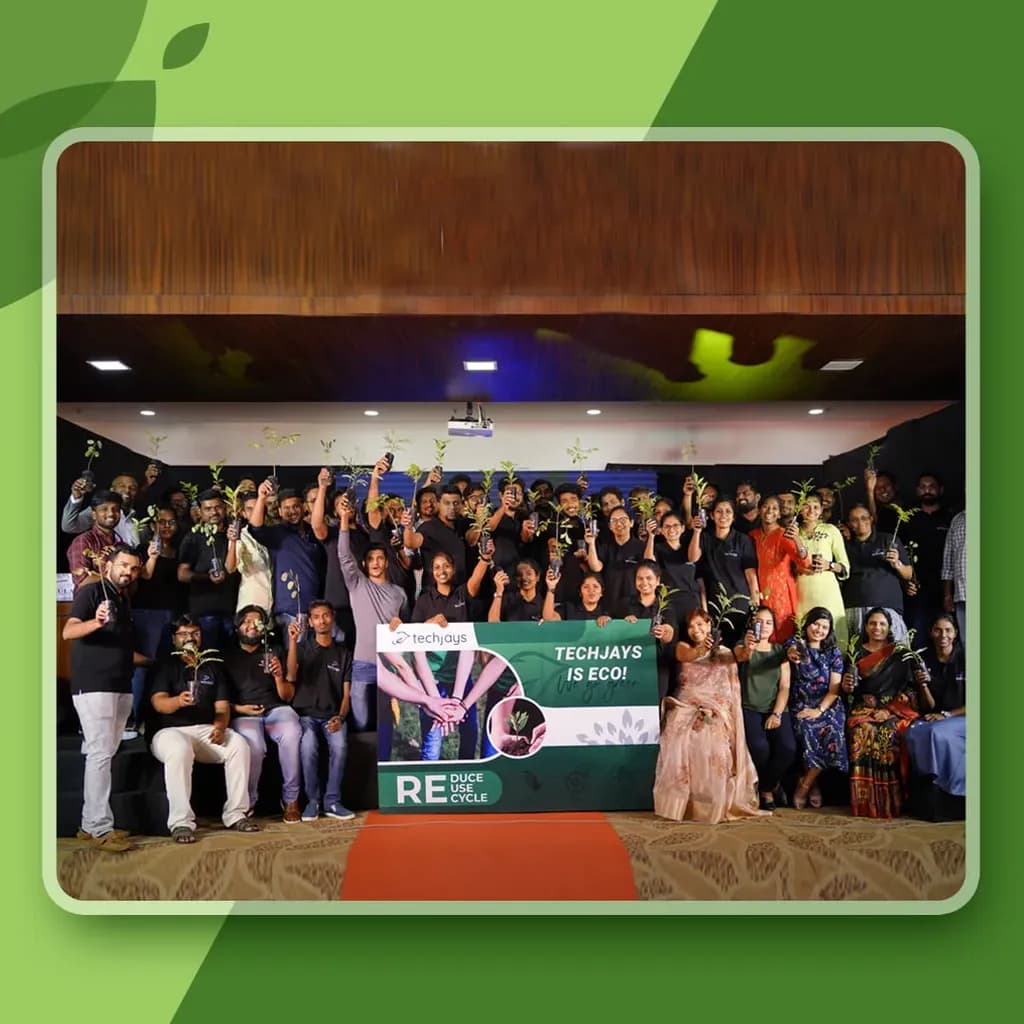
About Techjays
About
Techjays is The AI Reimagination Company — an enterprise AI partner founded by leaders with experience at Google. We don’t just experiment with AI; we build, deploy, and scale production-grade systems that solve real business problems.
Our focus is on industries where impact matters most — manufacturing, logistics, and complex enterprise operations. From intelligent automation to LLM-powered workflows, we design solutions that deliver measurable business outcomes in under 90 days.
With 20+ live AI systems already in production and over $100M in cost savings delivered, our work goes beyond proof of concept — it drives tangible value.
Headquartered in Menlo Park, Techjays operates across seven countries including the USA, India, UAE, UK, Canada, Australia, and Bangladesh — helping global enterprises rethink how they build, operate, and scale with AI at the core
Tech stack
 Amazon Web Services (AWS)
 Docker
Candid answers by the company
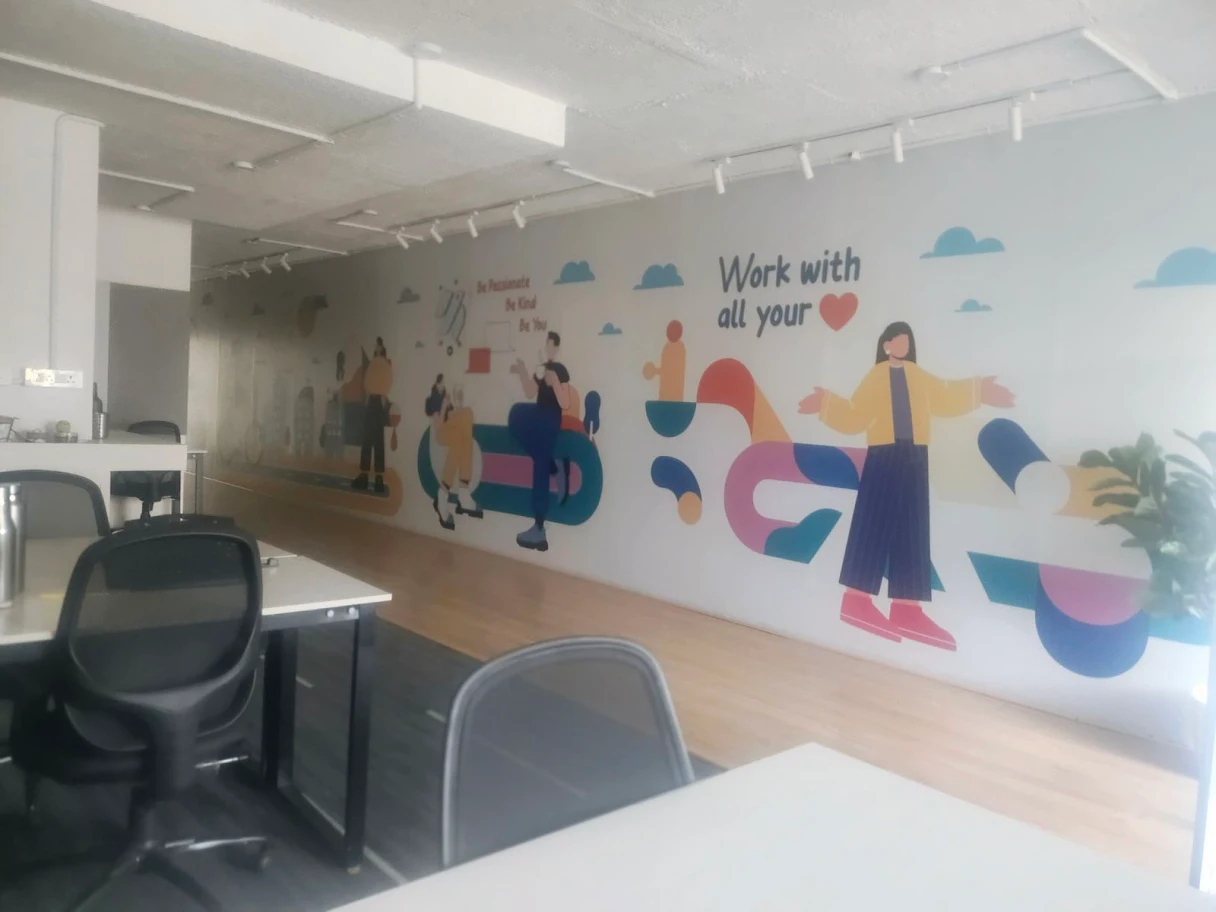
Coimbatore (remote) and Remote options available.
Product showcase

Photos











Company social profiles


Similar jobs (10)
 Python
Senior AI Engineer
Company: Techjays
Experience: 4–8 Years
Location: Coimbatore, Hybrid
Joining: Immediate or within 30 days preferred
About the Role
We are looking for a Senior AI Engineer with strong Python development skills and hands-on experience building and deploying AI-powered applications. The ideal candidate should have practical knowledge of LLMs, Retrieval-Augmented Generation (RAG), vector databases, and scalable backend systems.
You will work closely with engineering and product teams to design, develop, and deploy reliable AI solutions for real-world business problems.
Key Responsibilities
- Design, develop, and maintain scalable backend applications using Python and frameworks such as Django, Flask, or FastAPI.
- Build and integrate AI-powered applications using LLMs, RAG pipelines, and agentic AI workflows.
- Develop document processing, embedding generation, semantic search, and retrieval pipelines.
- Integrate LLM APIs and optimize prompts, response quality, latency, and cost.
- Work with vector databases and relational databases to build efficient data retrieval systems.
- Design and implement REST APIs, asynchronous processing, caching, and queuing mechanisms.
- Apply software engineering best practices, including design patterns, clean code, testing, and version control.
- Deploy and maintain applications on AWS or GCP using Docker and CI/CD pipelines.
- Monitor production systems, troubleshoot issues, and improve application performance and reliability.
- Collaborate with cross-functional teams to translate business requirements into practical AI solutions.
- Contribute to code reviews, technical documentation, and knowledge sharing within the engineering team.
Required Skills
- 4–8 years of experience in software development, with strong hands-on Python expertise.
- Strong understanding of data structures, algorithms, object-oriented programming, and design patterns.
- Experience building backend applications using Django, Flask, or FastAPI.
- Hands-on experience with LLM-based applications and API integrations.
- Practical experience implementing RAG pipelines, embeddings, and semantic search.
- Experience with vector databases such as Pinecone, Qdrant, Weaviate, or Chroma.
- Strong knowledge of SQL and relational databases such as PostgreSQL or MySQL.
- Experience with caching, message queues, asynchronous processing, and WebSockets.
- Familiarity with AWS or GCP, Docker, Git, and CI/CD pipelines.
- Understanding of API design, system architecture, application security, and performance optimization.
- Experience testing, debugging, and maintaining production-grade applications.
Preferred Skills
- Experience building agentic AI applications and multi-agent workflows.
- Familiarity with LangChain, LangGraph, LlamaIndex, or similar frameworks.
- Knowledge of Model Context Protocol (MCP) and tool-calling mechanisms.
- Experience with LLM evaluation, hallucination reduction, and output quality monitoring.
- Familiarity with fine-tuning, model selection, and inference optimization.
- Experience with LLMOps, AI observability, and production monitoring.
- Knowledge of Kubernetes and microservices architecture.
What We’re Looking For
- Strong problem-solving and analytical skills.
- Ability to take ownership of features from development through deployment.
- Practical understanding of how to build reliable AI applications beyond prototypes.
- Ability to make sound technical decisions and explain architectural trade-offs.
- Good communication and collaboration skills.
- Willingness to learn, experiment, and work on challenging AI engineering problems.

 Python
 Go Programming (Golang)
Job Description - AI Software Engineer
Role: AI Software Engineer
Location: Bengaluru, India
Employment Type: Full-time, WFO, Bengaluru
Experience: 2-8 years
Role Overview
As an AI Software Engineer, you will be responsible for designing, developing, and deploying AI-powered applications and intelligent agentic systems.
You will work across the entire engineering stack on AWS, from building backend services and integrating LLMs to developing agentic workflows, memory systems, and integrations with external tools.
This role requires strong software engineering fundamentals, an understanding of modern AI technologies, and the ability to translate ambiguous problems into reliable, production-ready solutions.
You will have significant ownership over product features and the opportunity to influence technical architecture and engineering decisions.
Key Responsibilities
1. AI Application Development
- Build AI-powered applications using Large Language Models (LLMs).
- Develop intelligent agents capable of reasoning, planning, and executing multi-step tasks.
- Design and implement agentic workflows using frameworks such as LangGraph or equivalent.
- Work with structured outputs, function calling, tool use, and multi-agent orchestration.
- Experiment with different models and techniques to improve accuracy, latency, and cost efficiency.
2. Backend Engineering
- Design, develop, and maintain scalable backend services and APIs.
- Build asynchronous workflows and distributed systems to support concurrent AI tasks.
- Design reliable systems for handling long-running agentic workflows, task execution, and event processing.
- Work with relational databases, vector databases, search systems, and knowledge graphs.
3. Context, Memory & Retrieval Systems
- Build systems that extract, organize, and retrieve information from large volumes of unstructured data.
- Develop RAG pipelines, semantic search, and contextual retrieval systems.
- Work on memory architectures that maintain long-term user and organizational context.
- Improve the relevance, accuracy, and reliability of AI-generated responses and actions.
4. Product Engineering
- Take ownership of features from problem definition to deployment.
- Collaborate with product and engineering teams to identify problems and build effective solutions.
- Integrate with external platforms and APIs such as Google Workspace, Slack, Jira, and GitHub.
- Monitor production systems, debug issues, and continuously improve application performance.
Required Skills & Qualifications
- Strong programming fundamentals and proficiency in Python or other equivalent programming languages
- Good understanding of data structures, algorithms, object-oriented programming, and software design principles.
- Experience building backend applications, REST APIs, and database-driven systems.
- Familiarity with LLMs, prompt engineering, and AI application development.
- Understanding of asynchronous programming, concurrency, and distributed systems.
- Experience working with SQL and NoSQL databases.
- Ability to write clean, maintainable, and production-quality code.
- Strong debugging and problem-solving skills.
Good to Have
- Hands-on experience with working with OpenAI, Anthropic, Gemini, or open-source LLMs, Building and scaling agents in production environments
- Experience with LangChain, LangGraph, LlamaIndex, or similar frameworks.
- Understanding of embeddings, vector databases, and semantic search.
- Experience with Neo4j, OpenSearch, Qdrant, or similar technologies.
- Familiarity with AWS, working with AWS stack for all applications.
- Experience building AI agents that interact with external tools and APIs.
- Experience deploying and monitoring production applications.
What We Look For
Beyond technical skills, we value engineers who demonstrate:
- Ownership: Take responsibility for problems and drive them to completion without waiting for instructions.
- Execution: Ability to move quickly from an idea or problem statement to a working implementation.
- Problem Solving: Break down ambiguous and complex problems into simple, effective solutions.
- Learning Agility: Stay curious and quickly learn new technologies, particularly in the rapidly evolving AI ecosystem.
- Product Thinking: Understand why something is being built, not just how to build it.
- Attention to Detail: Care about reliability, code quality, performance, and the end-user experience.
Why Join Teamie.ai?
- Work on challenging problems at the forefront of applied AI and agentic systems.
- Build products from the ground up in a fast-moving startup environment.
- Have significant ownership and influence over product and engineering decisions.
- Work closely with the founding team.
- Learn and experiment with the latest AI technologies and architectures.
- Be part of a team where your contributions have a direct impact on the product and company.
If you are excited about building intelligent systems that go beyond chatbots and actually get work done for users, we would love to hear from you.


 Machine Learning (ML)Python
Chief Engineer - Artificial Intelligence
AI Architecture | Production Engineering | LLM, RAG & Agentic AI
Primary objective: Build secure, scalable and reusable AI capabilities that move from experimentation to reliable production use across DocTutorials products and business functions.
Department
Technology & Product Engineering
Location
Hyderabad / Chennai
Reports to
Vice President - Technology
Experience
10+ years in software engineering, including 5+ years in AI/ML
Role Summary
The Chief Engineer - AI will define and lead AI engineering architecture, standards and production implementation. This is a senior, hands-on technical leadership role responsible for building reliable AI platforms and guiding AI engineers, data teams and application teams.
Key Responsibilities
1. AI Strategy and Architecture
· Define the AI engineering strategy, architecture and technical roadmap.
· Evaluate and select suitable models, frameworks, vector databases and AI platforms.
· Make practical build-versus-buy and open-source-versus-commercial decisions.
· Ensure AI solutions are modular, reusable, scalable, secure and cost-effective.
2. Production AI Engineering
· Lead AI initiatives from use-case assessment and proof of concept through production deployment.
· Build reusable AI services, APIs, pipelines and platform components for web, mobile and internal applications.
· Establish development, testing, deployment, monitoring and production-support practices.
· Resolve complex issues involving model quality, retrieval, performance, reliability and cost.
3. LLM, RAG and Agentic AI
· Design LLM applications, enterprise RAG solutions and controlled AI-agent workflows.
· Build document processing, chunking, embedding, indexing, retrieval and response pipelines.
· Implement source traceability, human approval and clear permissions for sensitive use cases.
· Improve response quality through prompt design, retrieval optimisation and evaluation.
4. AI Quality, Security and Responsible AI
· Define evaluation standards for accuracy, relevance, groundedness, safety, latency and cost.
· Introduce benchmark datasets and regression testing for prompts, models and retrieval pipelines.
· Implement safeguards for hallucinations, unsupported responses, data leakage and unsafe actions.
· Ensure role-based access, encryption, audit logging, secure secrets handling and approved data usage.
5. AI Platform and Integration
· Create common AI capabilities and integration standards that can be reused across products and teams.
· Integrate AI services with applications, databases and approved enterprise data sources.
· Implement observability for model usage, quality, errors, response time and cost.
· Reduce dependency on a single model provider, individual engineer or external vendor.
6. Technical Leadership and Team Development
· Define AI engineering standards for architecture, coding, review, testing and documentation.
· Remain hands-on through design reviews, critical code reviews, debugging and focused prototypes.
· Mentor AI/ML engineers, data engineers and application teams; support hiring and capability building.
· Work with Product and business teams to convert high-value problems into measurable AI solutions.
Required Skills and Experience
· 10+ years of software engineering experience, including 5+ years in practical AI/ML engineering.
· Proven experience moving AI solutions from prototype to reliable production use.
· Strong Python and production API development experience, preferably FastAPI.
· Strong knowledge of LLMs, RAG, prompt engineering, embeddings and agentic AI.
· Experience with vector databases such as pgvector, Qdrant, Milvus or Weaviate.
· Experience with LangChain, LlamaIndex, Haystack or similar orchestration frameworks.
· Knowledge of cloud architecture (preferably AWS), microservices, databases, queues and distributed systems.
· Experience with Docker, Kubernetes, CI/CD, observability and production support.
· Strong understanding of application security, data privacy and responsible-AI engineering.
· Demonstrated technical leadership, mentoring and stakeholder-management capability.
Good-to-Have Experience
· Healthcare, medical education, EdTech or digital-learning platforms.
· Medical-content intelligence, knowledge graphs, ontologies, taxonomy or semantic search.
· Clinical Case Library, personalised learning or recommendation systems.
· Multi-modal AI involving text, audio, images or video.
· Healthcare-data privacy, de-identification or standards such as SNOMED CT, ICD, HL7 or FHIR.
How Success Will Be Measured
· Production adoption and measurable business or learner impact of AI capabilities.
· Accuracy, groundedness, reliability, security and cost efficiency of AI solutions.
· Reusable AI services delivered across products with reduced technical and vendor dependency.
· Improved capability, engineering quality and ownership within the AI team.
We are looking for a hands-on AI engineering leader who can distinguish a valuable production capability from an attractive demo and build AI that is secure, scalable, measurable and maintainable.


Role Overview
We are looking for an AI Engineer to design, build, and ship production AI systems, including agentic AI applications, for enterprise clients. This is a hands-on engineering role: you will write production code, build and evaluate models and agents, and work closely with architects and product teams to take solutions from prototype to scale.
Key Responsibilities
Design and build agentic AI systems: agent workflows, tool/function-calling, memory, and human-in-the-loop patterns. Build and productionise RAG pipelines, prompt-based applications, and LLM integrations across providers. Develop and maintain data and ML pipelines: feature engineering, model training, evaluation, and monitoring. Integrate AI systems with enterprise applications (CRMs, ERPs, ITSM tools) via APIs, events, and MCP-based tool servers. Implement guardrails, prompt-injection defences, and evaluation frameworks to keep AI systems safe and reliable in production.
Write clean, tested, production-grade code and participate actively in code and design reviews.
Collaborate with architects, product managers, and delivery teams to translate requirements into working AI solutions. Troubleshoot and optimise AI systems for accuracy, latency, and cost in production.
Required Qualifications
8–12 years of hands-on software engineering experience, with a strong, unbroken technical track record. Hands-on experience building and shipping AI/ML systems in production, not just POCs.
Practical experience with agentic AI systems and at least one major agent framework (LangGraph, CrewAI, AutoGen, OpenAI Agents SDK, Bedrock Agents/Strands, or Semantic Kernel).
Experience with LLM/GenAI systems: RAG pipelines, prompt engineering, structured outputs, and tool calling across providers.
Strong Python skills (TypeScript/Node.js a plus), with production-grade testing, CI/CD, and API design practices. Working knowledge of ML fundamentals: model evaluation, feature engineering, and experimentation. Cloud-native experience on AWS and/or Azure: containers, serverless, event backbones, and vector databases. Understanding of LLM safety and reliability practices: guardrails, prompt-injection defences, and observability.


 Flask
 Django
Job Title: Senior AI Engineer
Experience: 5–10 years in software engineering, with 3+ years in AI/ML engineering preferred
Employment Type: Full-time
Department: Artificial Intelligence / Engineering
Location: Bangalore
We are looking for a highly skilled Senior AI Engineer to design, develop, deploy, and scale intelligent AI-powered applications and solutions. The ideal candidate will have strong expertise in machine learning, Generative AI, Large Language Models (LLMs), Retrieval-Augmented Generation (RAG), AI agents, and production-grade software engineering.
The candidate will work closely with product managers, data scientists, software engineers, and business stakeholders to translate complex business requirements into scalable, reliable, secure, and cost-effective AI solutions.
Key Responsibilities
1. AI Solution Design and Development
- Design, develop, and deploy end-to-end AI and machine learning solutions.
- Build intelligent applications using LLMs, Generative AI, NLP, and deep learning techniques.
- Develop scalable AI architectures and reusable components for enterprise applications.
- Evaluate AI models and select appropriate approaches based on accuracy, latency, cost, and business requirements.
2. Generative AI and LLM Engineering
- Develop LLM-powered applications using models from providers such as OpenAI, Anthropic, Google, or open-source ecosystems.
- Design and implement RAG pipelines, document processing workflows, semantic search, and knowledge retrieval systems.
- Build AI agents and multi-step workflows using appropriate orchestration frameworks.
- Implement prompt engineering, structured outputs, tool calling, and context management.
- Optimize model performance through evaluation, fine-tuning where appropriate, and inference optimization.
3. Machine Learning and Data Engineering
- Develop and operationalize machine learning models for classification, prediction, recommendation, and other business use cases.
- Work with structured, unstructured, and multimodal data.
- Build data preprocessing, feature engineering, model training, and validation pipelines.
- Apply appropriate model evaluation techniques and statistical methods.
4. Production Deployment and MLOps / LLMOps
- Deploy AI solutions using cloud platforms such as AWS, Microsoft Azure, or Google Cloud.
- Build automated CI/CD pipelines for AI applications and model deployment.
- Implement model versioning, experiment tracking, monitoring, and performance evaluation.
- Optimize inference latency, throughput, infrastructure utilization, and operating costs.
- Establish observability for AI applications, including token usage, retrieval quality, latency, failures, and model behavior.
5. Software Engineering and System Architecture
- Develop production-quality applications and APIs using Python and modern backend frameworks.
- Design RESTful APIs, asynchronous processing systems, and microservices where appropriate.
- Integrate AI services with enterprise applications, databases, and third-party systems.
- Use relational databases, vector databases, caching, and distributed systems effectively.
- Apply software engineering best practices, including testing, code reviews, documentation, and design patterns.
6. Security, Quality, and Responsible AI
- Implement safeguards against prompt injection, data leakage, insecure tool execution, and unauthorized access.
- Apply appropriate privacy, security, and compliance controls to AI systems.
- Evaluate hallucinations, bias, reliability, and failure modes.
- Design human-in-the-loop workflows and fallback mechanisms for critical use cases.
7. Technical Leadership and Collaboration
- Lead technical design discussions and mentor junior AI engineers.
- Define engineering standards, coding practices, and AI development guidelines.
- Collaborate with cross-functional teams to deliver measurable business outcomes.
- Conduct code reviews, evaluate emerging technologies, and recommend practical innovations.
- Communicate technical trade-offs and solution architecture to both technical and non-technical stakeholders.
Required Technical Skills
Programming and Backend Development
- Strong proficiency in Python.
- Experience with FastAPI, Flask, or Django.
- Knowledge of REST APIs, asynchronous programming, data structures, algorithms, and software design principles.
- Experience with Git, automated testing, and CI/CD.
AI and Machine Learning
- Strong understanding of supervised and unsupervised learning, model evaluation, and statistical concepts.
- Hands-on experience with PyTorch, TensorFlow, or scikit-learn.
- Knowledge of NLP, embeddings, transformers, and deep learning fundamentals.
Generative AI and LLMs
- Hands-on experience building production applications using LLM APIs or open-source models.
- Strong understanding of RAG architecture, embeddings, chunking, reranking, and retrieval evaluation.
- Experience with vector databases such as Pinecone, Weaviate, Qdrant, Milvus, or pgvector.
- Familiarity with orchestration frameworks such as LangChain, LangChain, or comparable tools.
- Experience with tool calling, structured generation, agent workflows, and LLM evaluation.
Cloud and Infrastructure
- Experience with AWS, Azure, or Google Cloud.
- Working knowledge of Docker and Kubernetes.
- Familiarity with model serving, scalable APIs, monitoring, and production deployments.
- Experience with MLOps or LLMOps practices.
Databases and Data Processing
- Strong SQL skills and experience with relational databases.
- Familiarity with NoSQL databases, data pipelines, and distributed processing.
- Experience working with unstructured data, document ingestion, and retrieval systems.
Preferred Qualifications
- Experience with fine-tuning, quantization, or serving open-source LLMs.
- Experience with multimodal AI, including text, image, audio, or video.
- Knowledge of agent evaluation, workflow orchestration, and multi-agent systems.
- Experience with AI security, guardrails, governance, and responsible AI.
- Experience optimizing AI workloads for latency, scalability, and cost.
- Contributions to open-source AI projects, research, or technical publications.
Education
- Bachelor's or Master's degree in Computer Science, Artificial Intelligence, Machine Learning, Data Science, or a related field.
- Equivalent practical experience and demonstrated engineering expertise may be considered.
Key Success Metrics
- Quality, accuracy, and reliability of deployed AI solutions.
- Production adoption and measurable business impact.
- Reduction in inference costs and response latency.
- RAG retrieval quality and reduction in unsupported or incorrect responses.
- System availability, scalability, and operational stability.
- Delivery timelines, code quality, and technical mentoring effectiveness.

 PythonDjango
 PostgreSQL
We're hiring Drumbeat's first Senior Product Engineer to help us go to the next level.
We're not first-timers. We're the team that founded Phrasee in 2015 and grew it to more than 100 people, customers around the world, and a >$100m exit. Lots of people made lots of money, including the founding employees.
With Drumbeat, our plan is to do it all again… except this time, bigger and faster.
What is Drumbeat?
Drumbeat (www.drumbeat.com) predicts your next best action on LinkedIn, then copilots your team to turn invites, DMs and posts into pipeline.
We launched in September 2025 and have raised a £2m seed round led by a well-known VC. We're building the core team around our cofounders (Parry, Jonny and Dan) and Mohit, our Engineering Manager and Phrasee's first engineer. You'll report to Mohit.
What you'll be building on
- Setlist: a short, ordered list of the right things for each person to do today.
- Radar: predicts who each rep should connect with now, not everybody who matches a job-title search.
- Riff and AuthorDNA: help people find something worth saying, and write it in their own voice.
- Campaigns, Conversations, Backstage and Analytics: team-wide activity, replies, company knowledge and reporting.
Under the hood: Django and PostgreSQL, background jobs on Redis, LLM workflows, statistical models that learn what works, and integrations with LinkedIn and CRMs. A lot of our code is written with AI coding agents, inside a strict engineering process.
How we think about engineering
- "Human-first AI, not AI-first humans." AI agents write a lot of our code. They don't make our decisions. We want someone super smart without AI, and even smarter with it, who knows when the machine is blowing smoke.
- "Spend 55 minutes on the problem." Understand what's actually wrong before you fix it.
- "Fix the class, not the instance." Every bug is an example of something bigger. Find the pattern, and fix it everywhere it lives.
- "A check must be able to fail." A test you've never seen go red proves nothing.
- "You don't need a Ferrari to drive to the supermarket." Simplicity over cleverness, every time.
What you'll own
- Technical architecture. How Drumbeat is built, so it holds up as we add customers, features and integrations.
- Shipping features end to end. From Parry and Mohit's briefs, and turning Parry's MVPs into production features.
- Foundations. Scale, resilience (safe retries, timeouts and fallbacks when outside services wobble), cost and refactoring.
- What you build. Once it's live, it's yours: you maintain it and fix it.
- The hardest bugs. The ones nobody else can crack.
Your experience
- 8+ years as an engineer, at a product company, preferably B2B SaaS.
- Time at a smaller company, so you know how to get stuck in.
- You've owned a system in production, not just added features to one.
- Senior Python and Django: Postgres, background jobs, correctness in production.
- System architecture and refactoring.
- You direct AI coding agents well, and explain trade-offs in plain English to people who aren't engineers.
Where you'll work
Delhi / NCR. You'll be in our Delhi office some days each week, alongside Mohit.
Pay
₹40–65 lakh CTC, plus equity that vests as the company hits revenue milestones.
This is probably not a job for most people. Don't apply if you want an easy job. Apply if you want a hard one: lots of responsibility, very little bureaucracy, plenty to figure out, and a genuine chance to shape what this company becomes… and make a bunch of money as a result.
If that sounds exciting, LET'S PARTY.
 PythonPostgreSQL
Company: Wisetr Technology Pvt. Ltd. (FunnelKit and Sublium are brands of Wisetr Technology Pvt. Ltd.)
Websites: www.funnelkit.com | www.sublium.com
Location: Remote (candidates across the globe can apply)
Employment type: Full-time, permanent
Experience: 3+ years building and running AI/ML or LLM-based features inside production software used by paying customers (prototypes alone do not count)
Education: B.E./B.Tech in Computer Science, Information Technology, Electronics or a related field, or an equivalent strong engineering background. Proficiency in Python, PostgreSQL and TypeScript is required.
Working days and hours: 5 days, Monday to Friday
About FunnelKit
FunnelKit builds powerful no-code funnel and marketing automation products for businesses worldwide. Our mission is to help small businesses grow profitably by giving them the right tools to increase conversions and revenue, without unnecessary complexity.
We are a product-first, customer-driven team that values ownership, simplicity, kindness, and excellence.
Role Overview
This role is ideal for someone who:
- Treats AI as an engineering discipline: you design for results a store owner can rely on, and you test that reliability instead of stopping once the model responds.
- Has spent 3+ years putting AI/ML and LLM features in front of paying customers in a live product.
- Picks up an ambiguous problem, decides how to attack it, and delivers without close direction.
- Writes and speaks clear English, and can walk engineers, designers, product managers and support colleagues through a technical trade-off.
At FunnelKit and Sublium, AI sits inside the tools merchants use every day: suggesting funnel and checkout improvements, drafting email and on-site copy, grouping customers into segments, and automating routine marketing work. You will build these capabilities, along with the internal AI tooling our own teams use for reporting and decision support.
You will carry a project from first data exploration through model choice, evaluation, API and interface work, release and production monitoring, working daily with Product, Engineering, Design, QA and Customer Success.
Key Responsibilities
Build AI Features for Merchants
- Ship AI capabilities inside FunnelKit and Sublium, such as funnel and checkout recommendations, email and SMS copy drafting, customer segmentation, revenue forecasting and agent-style automations.
- Take a merchant’s goal and store data and produce suggestions concrete enough to act on. After launch, study real usage and plan the next iteration.
- Agree success metrics and event tracking with the Product Manager before you build.
Design the LLM Layer
- Create prompt templates, schema-validated responses, tool calls, retrieval (RAG) and safety checks, and chain them into multi-step agent flows where they add value.
- Compare models, frameworks and hosting options for each use case against quality, response time and spend.
- Add fallback providers, response caching and spend limits so features stay dependable at scale.
Work with Data
- Prepare imperfect store, funnel and event data for analysis and for use as model input.
- Anchor generated text to real figures from the merchant’s account, so AI output never contains invented numbers.
- Run the pipelines that collect, transform and serve this data to AI features and internal reports.
Measure and Protect Quality
- Build evaluation sets and monitoring so you can show that each release beats the previous one and catch regressions before merchants do.
- Report quality, latency and per-request cost on dashboards shared with the team.
- Help QA design tests for output that changes from run to run.
Own Delivery End to End
- Implement the backend services (Python or TypeScript) and the TypeScript and React interface that carry a result to the merchant, and deploy them.
Build Internal AI Tools
- Create AI-assisted reporting, analytics and workflow tools for Support, Marketing and Product teams, simple enough that non-engineers use them without help.
Engineering Habits and Sharing
- Deliver tested, maintainable code with error handling, logging and tracing.
- Use AI coding assistants daily, and check their output before it is merged.
- Write down how each solution works and how AI helped build it, so colleagues can reuse the approach.
- Follow developments in models and tooling, and propose what is worth adopting.
Collaboration and Customer Support
- Work with Product, Design, QA and Customer Success to turn customer problems into improvements.
- Set privacy, safety and compliance rules for AI features, with legal and security input where needed.
- Make features explainable to L1/L2 support teams, and help diagnose serious production problems.
Required Skills and Experience
- Production AI experience: 3+ years shipping ML or LLM-based functionality that customers actually use. Prototypes and hackathon projects alone are not enough.
- Python (required): production-quality code with tests, type annotations, packaging and async where it fits.
- TypeScript (required): production-quality TypeScript with strict typing and tests, for Node.js services and for React interfaces.
- Full-stack range: comfortable on both sides, with backend services in Python or Node.js and interfaces in React. You may lean toward one side.
- LLM engineering: prompting, structured outputs, tool use, retrieval-augmented generation, guardrails and measuring output quality.
- Frameworks and retrieval: LangChain, LangGraph, LlamaIndex or comparable tools, plus embeddings and vector stores (for example Pinecone, Chroma, FAISS or Qdrant). You can build a retrieval pipeline without a framework.
- ML foundation: you understand how models behave, when fine-tuning beats prompting, and how to evaluate fairly.
- Data: SQL and pandas or Spark, and experience with unclean production data.
- Services and infrastructure: building and deploying APIs (FastAPI, Flask or similar), working knowledge of Cloudflare, AWS, GCP or Azure, Docker, and familiarity with Kubernetes.
- Workflow: Git and GitHub with pull-request reviews, and daily use of AI coding assistants (Claude Code, Cursor, Codex or similar) with a clear account of how you verify their output.
- Judgement: product sense (you care whether a feature is used and moves a metric), skill at diagnosing production failures, and a preference for simple designs.
- Communication: strong written and spoken English, clear documentation, and the ability to explain trade-offs to non-technical stakeholders.
- Remote requirement: must be able to work remotely, reliable internet and availability for meetings during agreed hours.
Education
- B.E./B.Tech in Computer Science, Information Technology, Electronics or related fields (or an equivalent strong engineering background).
- Certifications in AI/ML or data are a plus but not mandatory.
Current Work Profile (What We Expect to See)
Candidates should currently be working, or have recent experience, as one of the following, with demonstrable impact:
- AI Engineer, Applied AI Engineer or ML Engineer in a B2B SaaS or product company.
- Full-stack or backend engineer who has shipped LLM-powered features (RAG, agents or similar) in a production product.
- Software engineer driving AI-powered internal tools or data platforms in a software or product organisation.
In your application, please highlight:
- Specific AI features you have shipped (what, how, impact), and how you measured output quality.
- Your current or most recent role, scope, tech stack and the type of product or company.
- Links to GitHub, demos, case studies or public write-ups if available.
Nice-to-Have Skills
- Marketing technology context: marketing automation, personalisation or conversion optimisation.
- Generating more than text, such as page layouts, designs or publish-ready assets.
- Evaluation tooling such as Langfuse, DeepEval or RAGAS, or pipelines that use a model as the judge.
- Agent orchestration (CrewAI, LangGraph, AutoGen) and tool integration through MCP.
- Cost efficiency work, including fine-tuning with LoRA, QLoRA or PEFT, and quantisation.
- MLOps practice: experiment tracking (MLflow, Weights & Biases), drift monitoring, and platforms such as Databricks or SageMaker.
- Building internal tools that non-technical colleagues rely on.
- Public work: open-source contributions, papers or technical articles.
- Prior experience in a remote-first or globally distributed team.
Why This Role is Exciting
- Product Impact: Build AI features that directly affect revenue and growth for thousands of WooCommerce businesses.
- AI-First Mandate: AI is part of our core products and strategy, not a bolt-on, and you will shape how it is built.
- Full Ownership: Own AI projects from data and model choice to the interface and production monitoring.
- Cross-Product Thinking: Work across an ecosystem of products, not siloed features.
- Modern Engineering: AI-enhanced workflows, continuous improvement and a quality-first culture.
- Global Reach: Your work will be used by merchants worldwide, at scale.
What Success Looks Like
First 3 Months:
- Learn the FunnelKit and Sublium products, data and codebase.
- Ship your first AI-powered feature or enhancement from concept to production, with an evaluation baseline in place.
- Establish credibility as an engineer who writes reliable code and verifies AI output before it ships.
First 6 Months:
- Own an AI capability end to end, including evaluation, observability and cost control.
- Improve how the team builds AI features (prompt standards, guardrails, evaluation practices).
- Ship an AI solution or internal tool that becomes a best practice in the company.
First Year:
- Drive cross-product AI improvements and reusable AI components that benefit the whole FunnelKit and Sublium ecosystem.
- Be the go-to person for complex AI engineering decisions.
- Contribute to hiring and growing AI capability in the team.
What We Value
- Product-minded engineering: Understanding the user and the business impact, not only technical elegance.
- Ownership mentality: Taking responsibility for outcomes, not just tasks.
- Simplicity and care: Maintainable code, sensible failure handling and designs that stay easy to explain.
- Accountability for AI-assisted work: AI tools speed you up, and you remain responsible for checking everything you ship.
- Continuous improvement: Always learning, especially in AI.
- Knowledge sharing: Writing docs, mentoring others and building team capability.
What We Offer
- Opportunity to work on globally used B2B SaaS products with a strong AI mandate.
- Competitive compensation (CTC benchmarked for 3+ years of relevant experience, including at least 1 year of production AI work).
- High-ownership, low-bureaucracy environment.
- Collaborative, product-driven culture with strong emphasis on AI innovation.
- Long-term growth and learning opportunities in applied AI engineering.
- Technical leadership growth opportunities.
NOTE: This is a full-time remote role with the company. Please review your answers for clarity and accuracy before you submit.
FunnelKit is committed to creating an inclusive environment and is an equal opportunity employer. We celebrate diversity and welcome applications from candidates of all backgrounds.

 Python
 NodeJS (Node.js)Amazon Web Services (AWS)
About Orenda
Orenda is a fintech-enabled financial services company founded in 2017 and based in Ahmedabad, Gujarat. We work as a corporate DSA and channel partner for leading banks and NBFCs, helping individuals, professionals, and MSMEs access suitable financial solutions across business loans, personal loans, home loans, loan against property, and professional loans.
At Orenda, we combine financial expertise, technology, and streamlined processes to simplify the lending journey. We are building our own lending-tech platform to improve operational efficiency, strengthen lender and partner integrations, and develop technology-driven solutions that support our evolving business needs.
About the role
We're looking for a Lead Software Engineer who enjoys building as much as designing. You'll shape how our systems are architected, write a good share of the code yourself, and lead a team of 3 to 5 engineers, including AI/ML engineers.
This is a hands-on leadership role, not a pure management or architecture position. Your time will be roughly split like this:
Share of time
Leading the team ~30%
Solution design ~30%
Hands-on coding ~30%
Deployment and infrastructure~10%
What you'll work on
Solution design and architecture
• Turning business needs into technical designs that are practical to build and easy to maintain
• Making architecture decisions across services, integrations and data flows
• Estimating, scoping and planning new features with business and product stakeholders
• Shaping the solution design for AI/ML use cases alongside the AI/ML engineers
Engineering and delivery
• Writing production code in Python and Node.js
• Rolling out new features across our internal and partner-facing platforms, including our CRM and partner portal
• Continuously improving existing systems for performance, reliability and code quality
• Reviewing code and setting engineering standards for the team
Infrastructure and cloud
• Maintaining and upgrading our infrastructure, including a planned move to a major cloud platform
• Owning deployments and production stability together with the team
• Working with event-driven and messaging systems (NATS today, Kafka planned)
Team leadership
• Leading and mentoring a team of 3 to 5 engineers
• Planning and prioritising work, unblocking the team, and making sure things ship
• Building a culture of ownership, clear documentation and quality
What we're looking for
• 5 to 8 years of software engineering experience, with hands-on coding in your recent roles
• Strong command of Python and Node.js
• Proven experience designing and building backend systems and microservices that run in production
• Hands-on experience deploying and running workloads on at least one major cloud platform (AWS, Azure or GCP)
• Solid working knowledge of PostgreSQL
• Experience with messaging or event streaming systems such as NATS, Kafka or RabbitMQ
• Experience leading or mentoring a small engineering team
• Comfort estimating effort, breaking down features and planning delivery
• Enough understanding of AI/ML systems to guide their solution design and integration
• Clear communication with both technical and non-technical stakeholders
Good to have
• Experience working at a fintech, lending or financial services company
• Hands-on experience with Kafka
• Experience leading an infrastructure upgrade or cloud migration
• Experience building or scaling CRM or partner-facing portal products
Why Join Us?
- Build a growing lending-tech platform: Play a key role in shaping the technology behind a growing financial services business.
- Own technical decisions: Contribute directly to architecture, engineering standards, and technology direction.
- Stay hands-on: Combine solution design and technical leadership with meaningful coding responsibilities.
- Work with emerging technologies: Collaborate with AI/ML engineers and contribute to evolving platform capabilities.
- Lead and grow a team: Mentor engineers and help build a strong engineering culture as the technology function scales.
- Make a measurable impact: Build systems that improve operational efficiency and support business growth.
 Python
• Develop and deploy AI solutions across ML and other genAI use cases.
• Design, build, validate and optimize predictive models including regression,
tree-based models, ensemble methods, gradient boosting and deep
learning architectures where appropriate.
• Develop and deploy LLM-based and Generative AI solutions, including retrieval-
augmented generation (RAG), prompt engineering, fine-tuning and agentic
workflows.
• Build multi-agent systems and tool-integrated AI solutions for analytics
automation, insight generation and conversational interfaces.
• Apply statistical analysis, hypothesis testing and experimental design (including
A/B testing) to inform business decisions.
• Collaborate with cross-functional teams
• Ensure production readiness through monitoring, model governance,
performance tracking, retraining strategies and documentation.
• Analyze structured and unstructured datasets to generate actionable insights.
• Communicate analytical findings and technical concepts clearly to cross-
functional stakeholders.
• Contribute to code reviews, best practices and continuous improvement of AI
infrastructures.
• Independently manage projects in environments with evolving requirements and
timelines.
 Go Programming (Golang)Amazon Web Services (AWS)PostgreSQL
Most sales tools help you send emails. We’re building something different.
At Salesforge, we’re creating autonomous AI agents that can:
Find the right prospects
Generate highly personalized outreach
Run conversations
And book meetings
All without human involvement.
Why this is interesting
A lot of AI products stop at “generate text.” We’re focused on outcomes.
That means solving problems like:
How do you generate messages that actually get replies?
How do you evaluate and improve agent performance over time?
How do you orchestrate millions of AI-driven interactions reliably?
How do you combine structured data + LLMs in a way that scales?
If you enjoy working at the intersection of systems + AI + real-world feedback loops, this will feel like a playground.
What you’ll be working on
You won’t be maintaining legacy systems.
You’ll be:
Designing and building core backend systems that power our AI agents
Creating APIs and services that handle high-scale, real-time workflows
Working with queues (Kafka / SQS / RabbitMQ) to orchestrate async systems
Thinking deeply about performance, cost, and reliability in AI pipelines
Shipping features end-to-end with a small, senior team
The team
We’re a small group of experienced builders. We move quickly, care about quality, and avoid unnecessary process.
No layers of management.
No long planning cycles.
Lots of ownership and autonomy.
What we’re looking for
5+ years of backend engineering experience
Strong system design fundamentals
Experience with distributed systems and async processing
Familiarity with relational and/or document databases
Clear communicator, low ego, high ownership
Why join
You’ll work on a product where the output is measurable (meetings booked, revenue generated)
You’ll have real ownership from day one
You’ll be early in building a new category (AI sales agents)
You’ll grow as fast as we do












 Follow Cutshort
Shubham Vishwakarma
Full Stack Developer - Averlon